1 – Economy
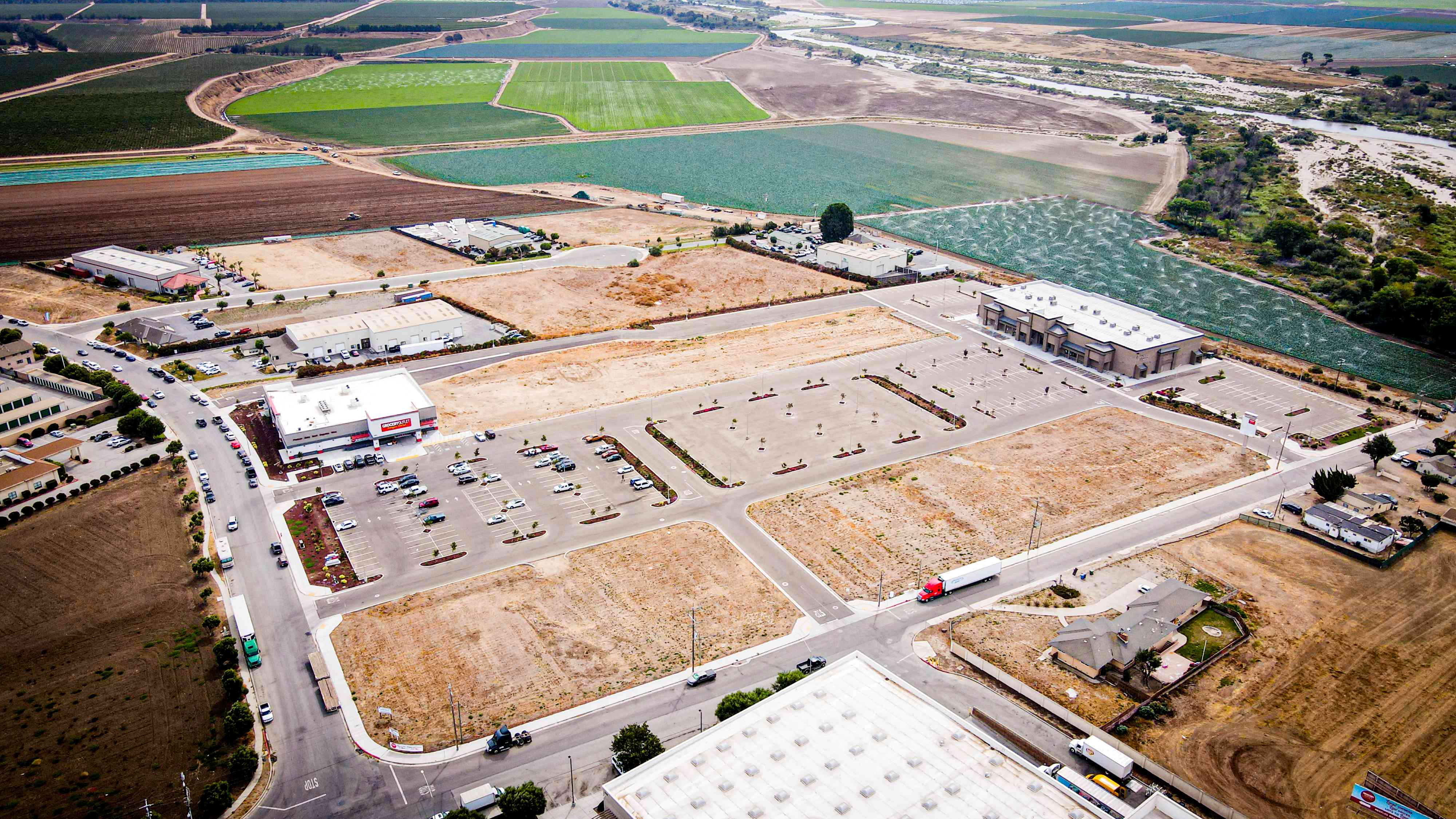
We cultivate a thriving economy that supports quality retail for our residents’ shopping needs, small businesses, and regional tourism. We aim to provide our residents with secure and well-paid jobs that will serve as the background of their livelihoods. Residents are able to shop locally for their essential needs.
Build a Resilient and Diverse Local Economy by Supporting Business Attraction, Retention, and Expansion
- Invest in targeted data collection and analysis to identify local and regional retail demand and service gaps, with a focus on healthcare-related needs.
- Develop a comprehensive marketing toolkit and strategic plan to attract developers and investors, prioritizing the Northern and Southern gateways as priority growth areas for major retailer expansion.
- Enhance Collaboration with Retail California to promote the Soledad Marketplace and support the timely completion and full buildout of the shopping center.
- Develop a clear and engaging communication strategy to keep the community informed about upcoming retail opportunities and encourage them to support local businesses.
- Engage proactively with healthcare providers to promote and market available vacant office space and underutilized parcels for potential medical and wellness-related uses.
- Design and implement an incentive program to attract new retailers with the potential to generate substantial sales tax revenue to strengthen the local economy.
- Conduct a business retention and expansion (BRE) survey annually to identify needs, barriers, and opportunities.
- Coordinate with the Small Business Development Center (SBDC), Soledad Chamber, and El Pajaro CDC to offer technical assistance on permitting, marketing, operations, and access to capital.
- Strengthen partnerships with local organizations to help existing retail businesses diversify their products and services while increasing sales tax revenue.
- Develop and launch a Small Business Resource webpage on the City’s website featuring local, state, and federal tools, funding opportunities, and best practices.
- Work with our partners (SBDC, El Pajaro, Chamber) to offer training workshops and webinars on key topics (e.g., e-commerce, workforce, financial planning).
- Establish a Business Recognition Program to celebrate local business achievements and increase community visibility.
- Identify and proactively support businesses at risk of closure or downsizing.
- Develop and implement strategies to prevent displacement of small and legacy businesses.
- Host peer networking events to strengthen the local business community and foster collaboration.
- Work with landlords and property managers to promote lease stability and maintain affordable spaces for small businesses.
- Conduct a comprehensive land use and site inventory to identify underutilized or vacant properties suitable for redevelopment with a focus on sites along Nestles and Los Coches and the Northern Gateway.
- Develop a Redevelopment Opportunity Map highlighting priority sites with details on zoning, infrastructure, and development readiness.
- Collaborate with property owners and brokers to market strategic sites to target industries (e.g., logistics, small manufacturing, health services, retail).
- Create a site readiness program to address infrastructure gaps, zoning barriers, or environmental issues that limit development potential.
- Pursue grant funding or public-private partnerships to support site preparation or soil remediation where needed.
- Offer development incentives (e.g., expedited permitting, fee reductions, infrastructure support) for projects aligning with economic development and community goals.
- Integrate redevelopment efforts into broader economic development marketing and outreach materials to attract investment.
- Promote mixed-use or flexible-space concepts to encourage adaptive reuse and support modern employment needs.
Promote Tourism, Hospitality, and Agrotourism
- Strategic Planning:
- Develop a Tourism & Hospitality Action Plan in coordination with regional partners, tourism agencies, and local stakeholders.
- Establish short- and long-term goals to increase overnight stays, boost tourism revenue, and enhance visitor engagement.
- Gather visitor feedback to identify gaps and opportunities for improving the overall visitor experience.
- Destination Marketing & Promotion:
- Promote the brand identity for Soledad as the Gateway to Pinnacles through cohesive marketing and storytelling.
- Create a dedicated landing page on the city's website featuring local attractions, itineraries, and regional events.
- Collaborate with local wineries, Pinnacles National Park, and tour operators to create bundled experiences and promote weekend getaway packages.
- Install QR codes and kiosks to guide visitors toward local businesses, dining, and shopping opportunities in Soledad.
- Launch a targeted digital and social media campaign highlighting outdoor recreation, wine tourism, downtown events, and culinary experiences.
- Produce multilingual print and digital marketing materials to engage and attract a diverse range of visitors.
- Infrastructure & Amenity Readiness:
- Assess and identify infrastructure and hospitality gaps (e.g., signage, lodging, EV charging, public restrooms) and prioritize necessary improvements.
- Explore opportunities for eco-friendly lodging options, boutique hotels, or camping/RV facilities to accommodate park and wine visitors.
- Ensure downtown and tourism areas are walkable, well-signed, and accessible to improve the visitor experience.
- Collaborate with neighboring cities, wineries, and tourism partners to create and market a regional wine trail or tourism loop that includes Soledad as a featured destination, highlighting local tasting rooms, scenic routes, dining, and cultural attractions.
- Explore ridesharing between tourist attractions (shuttle to pinnacles & Wineries) or expansion of a public shuttle to Pinnacles.
- Events & Cultural Activation:
- Develop and support signature events (e.g., wine festivals, heritage celebrations, outdoor adventure weekends) that draw regional visitors.
- Partner with local artists, culture, and food organizations to activate public spaces for tourism, particularly the Downtown and Community Center.
- Partnership Development & Funding:
- Collaborate with the Monterey County Convention & Visitors Bureau, Caltrans, State Parks, and Pinnacles National Park for coordinated promotion.
- Pursue grants and sponsorships to support tourism infrastructure, signage, and regional promotional campaigns.
- Evaluate and develop sustainable funding models to ensure the long-term promotion and growth of tourism in South County and Soledad.
- Sustainable & Wellness Tourism:
- Promote eco-tourism experiences: biking, hiking, native plant trails.
- Create a sustainability guide for tourism-related businesses to encourage environmentally responsible practices.
- Install bike-friendly infrastructure, recycling stations, and green transit options at key visitor destinations.
- Support agritourism initiatives, including farm tours and rural overnight stays, through streamlined permitting and targeted marketing assistance.
- Revise and actively promote the Hotel Incentive Program, including financial tools, fast-track permitting, and support services.
- Evaluate program effectiveness and build strategic partnerships.
- Highlight Soledad’s tourism assets in recruitment materials.
- Consider rezoning key parcels to streamline hotel development and surrounding compatible uses (e.g., restaurants, retail, EV stations).
- Update hotel feasibility study and set measurable goals for development.
- Set a measurable goal to attract and approve at least one new hotel development within three years, with annual benchmarks to measure tracking outreach, site readiness, and investment interest.
-
Commission feasibility studies for regional attractions (e.g., entertainment venue) and Container
Village.
- A regional recreational attraction (e.g., Topgolf, waterpark, laser tag, indoor sports, or entertainment venue) targeting family, youth, and visitor markets.
- Soledad Container Village offering retail, food vendors, local makers, and pop-up cultural experiences. (Urgent and under a separate objective)
- Assess site readiness, including land availability, infrastructure capacity, traffic/accessibility, and utilities.
- Explore public-private partnership models and potential operators or anchor tenants for each concept.
- Conduct market demand analysis and host community input sessions.
- Evaluate development incentives and permitting needs to facilitate investment.
- Host community input sessions to gather feedback and refine concepts based on resident interests and regional appeal.
- Develop a strategy to leverage county, state, and federal funding sources aligned with tourism, workforce development, and recreation.
- Engage industry experts and developers early to test viability and inform feasibility scope.
- Finalize the lease with Legacy Signs to implement a digital billboard campaign promoting Soledad as a tourism hub.
- Design a cohesive freeway signage and brand campaign, including digital maps, welcome signs, and themed messaging (e.g., food, wine, outdoor adventure).
- Promote key destination assets such as Pinnacles National Park, local wineries, downtown walkability, cultural events, and the Container Village (when completed).
- Work with Caltrans and regional tourism agencies to install coordinated gateway signage on major entry corridors.
- Review and update the city’s sign ordinance to allow for creative, destination-driven signage and branding elements.
- Integrate branding and streetscape strategies into a broader Tourism & Hospitality Master Plan.
- Seek grant funding (e.g., Caltrans, Clean California, ArtPlace, USDA Agrotourism) for gateway, signage, and placemaking improvements.
- Collaborate with wineries, ag producers, and cultural groups to develop agrotourism offerings and cross-promotion opportunities.
Enhance Downtown Revitalization, Placemaking and Infrastructure Improvements
- Conduct a citywide branding initiative to capture resident input and define Soledad's shared identity rooted in local culture, outdoor recreation, and wine heritage.
- Launch co-branded products (e.g., Pinnacles Blend wine, branded outdoor gear) in partnership with local businesses.
- Integrate wine country and national park themes into downtown décor, wayfinding, and events.
- Support downtown businesses in adopting the city brand through workshops, toolkits, and marketing assistance.
- Host branding and visitor experience workshops for retailers, tourism operators, and community partners.
- Organize recurring themed downtown events such as wine walks, cultural nights, and seasonal food fairs to boost foot traffic and local pride.
The Container Village Project is an innovative multi-use space made from repurposed shipping containers designed to host restaurants, retail shops, and incubator businesses. The City received a USDA Rural Development Grant to conduct a feasibility study. During the development of this study, it became clear that a private developer is unlikely to participate, and securing $10.2 million in funding will be very challenging.
With Council approval, the City is seeking funding from the Economic Development Administration (EDA) to implement a phased approach to reduce the City's initial financial burden, better meet federal funding requirements, and provide greater flexibility as market conditions evolve. Adopting this approach offers a prudent path for revitalizing Downtown Soledad, creating new economic opportunities while managing risks and maximizing the chances of receiving grant funding.
- Planning (Year 1):
- Finalize the USDA Feasibility Study and phased development plan.
- Apply for EDA funding to complete construction documents.
- Issue an RFP and select a long-term site operator.
- Complete necessary site improvements for Phase 1 development.
- Collaborate with small businesses to prepare for interim activation.
- Partner with the SBDC, El Pajaro CDC, and Chamber of Commerce to recruit entrepreneurs, offering business coaching, branding, and mentorship.
- Pilot seasonal pop-up businesses to test market demand.
- Phase 0 (Interim):
- Develop and implement plan for Phase 0 of Container Village Project (Urgent)
- Launch a low-cost activation to test market interest, logistics, and community response.
- Activate the site with food truck pods, temporary seating, string lighting, and small events (e.g., concerts).
- Rotate vendors and pilot a container stall to assess operations and strengthen future grant applications.
- Phase 1 (Core):
- Construct the first phase of the Container Village (3 containers), including essential infrastructure and select anchor tenants.
- Establish early operational success to attract future grants and investors.
- Engage corporate and financial partners for sponsorships or naming rights.
- Phase 2 (Expansion):
- Expand the Village into a full public market with up to 10 containers, a park, and an amphitheater with public art, landscaping, and permanent amenities.
- Adjust phasing based on market demand and funding availability.
- Phase 3 (Long-Term):
- Plan for container lifecycle renewal and potential expansion.
- Implement the Front Street Landscaping Project to refresh medians and bulb-outs.
- Expand public art installations to strengthen downtown’s visual identity.
- Revise and relaunch the Front Street Façade Grant Program to allocate funding toward storefront improvements.
- Develop a Downtown Sign Program with design standards, incentives, and workshops for local businesses.
- Offer business enhancement resources (window display guides, marketing tips) and hands-on technical assistance.
- Collaborate with Code Enforcement to implement educational initiatives that promote compliance and maintain a clean, welcoming downtown environment.
- Align land use, zoning, and design standards with downtown revitalization goals to support mixed-use development and pedestrian access.
- Update and implement the Downtown Specific Plan to guide future growth and investment.
- Promote form-based code, mixed-use nodes, and improved pedestrian/bike access.
- Host public engagement sessions to inform business owners about the Downtown Specific Plan and discuss potential amendments.
- Ensure that the updated plan aligns with economic development, housing, and tourism objectives to create a cohesive vision for downtown Soledad.
- Refine the ELS Conceptual Plan into a detailed streetscape design for Front Street, including wayfinding, street furniture, landscaping, lighting, and public art elements.
- Complete the Front Street Landscaping Project to enhance and refresh downtown's visual appeal.
- Collaborate with Union Pacific Railroad to implement improvements to the underpass on Front Street as envisioned in the ELS design concept:
- Install a gateway sign on the bridge.
- Improve or replace deteriorating pigeon control netting with a more durable, effective, and aesthetic solution.
- Work with TAMC to create a safe pedestrian/biking connection with the potential of a protected bike lane.
- Install enhanced lighting for safety and aesthetics
- Add murals along the underpass inspired by Pinnacles National Park to create a welcoming and distinctive sense of place.
- Add lighting, trees, wind shelters, and seating to the streetscape to improve comfort and strengthen downtown's identity.
- Complete current infrastructure improvements underway in the Downtown Core.
- Conduct a comprehensive needs assessment of utilities, including water, sewer, broadband, and EV charging capacity.
- Develop a prioritized phasing plan to guide future capital improvement projects.
- Pursue state and federal grants to support infrastructure upgrades on key catalytic development parcels.
- Continue hosting events such as Music in the Park to attract artists, food vendors, and families downtown.
- Establish a designated food truck fpod as a pilot for the future Container Village.
- Designate vendor zones and micro-storefronts for rotating cultural and local product vendors.
- Provide permitting assistance and joint marketing to support local makers, artists, and food entrepreneurs.
- Feature products and experiences that highlight Soledad’s heritage—wine, agriculture, and proximity to Pinnacles National Park.
- Identify vacant or underused downtown buildings suitable for coworking or creative space conversion.
- Survey local entrepreneurs, freelancers, and remote workers to assess demand.
- Host pilot monthly coworking pop-up events in community facilities to build interest.
- Partner with broadband providers to ensure reliable high-speed internet access in potential sites.
- Pursue grants and public-private partnerships to establish a permanent coworking or innovation hub.
Evaluate Zoning, Land Use, and Sustainable Development
- Conduct a comprehensive review of zoning and land use designations to identify barriers to mixed-use, retail, and light industrial development.
- Draft and adopt zoning amendments that promote flexible, mixed-use, and employment-supportive land uses.
- Identify parcels constrained by outdated zoning and propose site-specific amendments to unlock redevelopment potential.
- Prepare an annexation strategy and economic justification for incorporating the 6-acre Northern Gateway property into city boundaries.
- Ensure zoning and annexation updates align with the City's long-range land use map, economic development strategy, and sustainability goals.
- Evaluate the feasibility of forming Community Facilities Districts (CFDs), Enhanced Infrastructure Financing Districts (EIFDs), or Community Revitalization Districts (CRDs).
- Model potential tax increment and revenue scenarios based on current and projected assessed values.
- Engage property owners, developers, and regional stakeholders to gauge support and participation.
- Align proposed district boundaries with annexation areas, infrastructure corridors, and strategic growth zones.
- Develop policy guidelines for ongoing district management and performance monitoring.
- Inventory and map all vacant and underutilized parcels, classifying them by ownership, infrastructure readiness, and market potential.
- Design tiered incentive programs (e.g., development fee reductions, expedited permitting, infrastructure cost-sharing, or tax incentives) to attract targeted investment.
- Market priority sites through regional and state-level commercial real estate networks.
- Conduct targeted outreach to developers, employers, and anchor tenants aligned with the City's economic priorities.
- Evaluate the development feasibility of all city-owned parcels and identify partnership or disposition strategies.
- Develop a Public-Private Partnership (P3) framework emphasizing revenue generation, job creation, and community benefit metrics.
- Issue Requests for Interest (RFIs) and establish guidelines for unsolicited development proposals on high-value sites.
- Implement a tracking system to measure ROI, job creation, and community outcomes from redevelopment projects.
Strengthen Workforce Development, Employer Partnership, and Economic Opportunity
Support inclusive economic growth by aligning education and training programs with local and regional industry needs, fostering employer partnerships, and expanding pathways to quality employment and economic opportunities for all Soledad residents.
- Collaborate with Hartnell and the local High School to develop school-to-career programs offering internships, mentorships, and summer job opportunities at the City.
- Create partnerships with industry partners to help launch a career exploration series bringing industry professionals into the Community Center for presentations, site visits, and hands-on learning modules.
- Formalize a Workforce Partnership Council between the City, school district, and key industries to coordinate curriculum, training pipelines, and resource sharing.
- Emphasize career pathways in high-growth sectors such as:
- AgTech and sustainable agriculture
- Public service and skilled trades
- Healthcare (nursing, techs, home care)
- Logistics and advanced manufacturing
Provide residents, especially youth, career changers, and underserved populations, with access to skills training, job readiness support, and pathways to living-wage employment.
- Collaborate with Hartnell College, adult schools, and nonprofits to deliver job readiness training, resume workshops, and interview coaching.
- Collaborate with workforce development agencies and other groups to host regular local or regional job fairs and pop-up hiring events with major employers and staffing agencies.
- In alignment with the Youth Council, provide soft skills training (e.g., communication, professionalism, punctuality) with a focus on youth and first-time job seekers who work at the Community Center or serve as youth interns.
- Work with employment partners to offer microgrants or stipends to help residents attend training in high-demand fields (e.g., construction, healthcare, clean energy).
- Partner with education providers to deliver technical training and industry-recognized certifications aligned with city workforce needs (i.e., water operators).
- Work with First 5 and El Pajaro CDC to develop or support a childcare training and incubation center to expand early education workforce and small-business opportunities.
- Use labor market data to recruit new industry sectors and reduce dependence on ag and retail.
- Proactively attract and retain living-wage employers in sectors such as clean energy, logistics, healthcare, and manufacturing.
2 – Housing
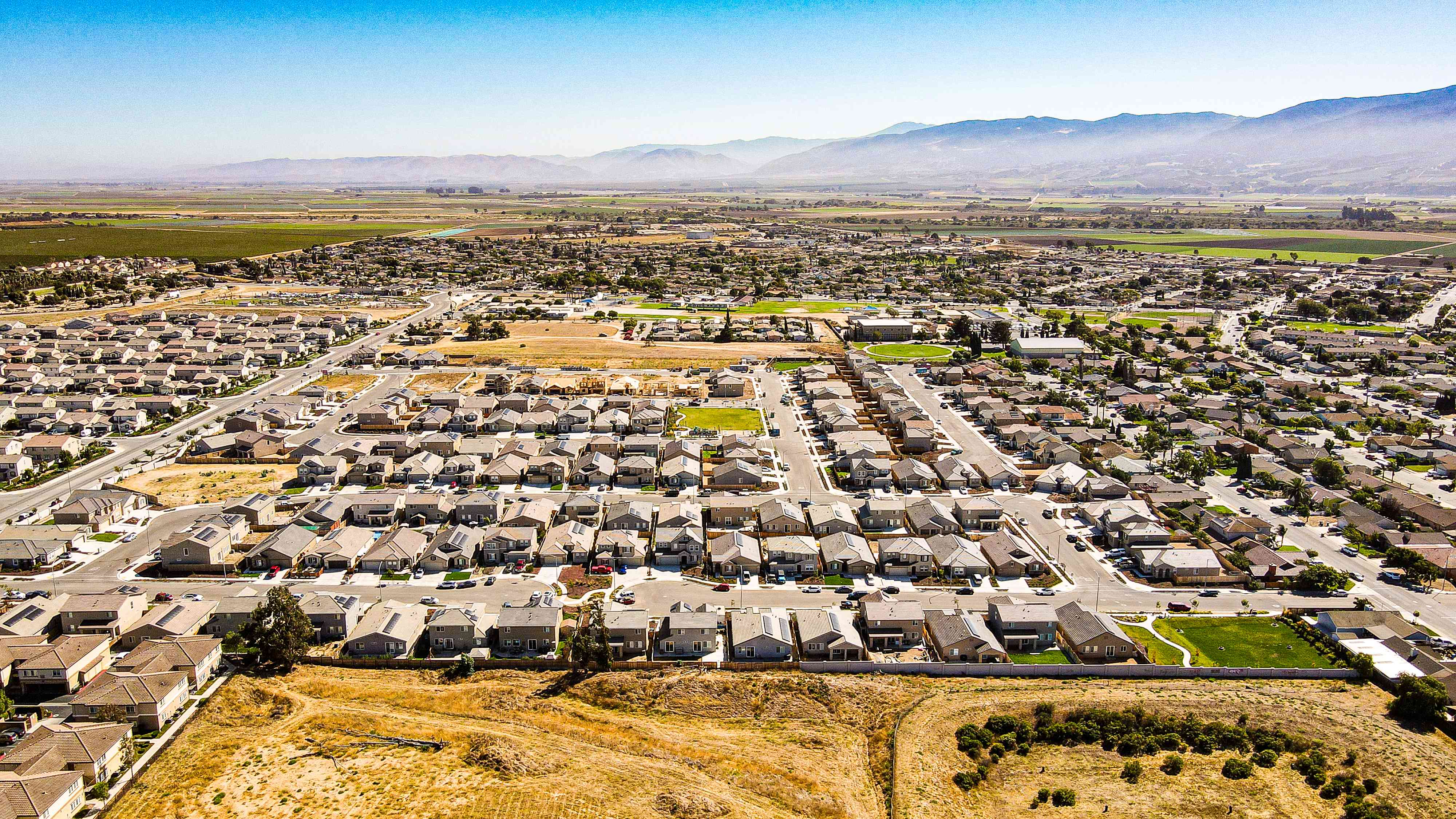
We ensure access to quality, safe, and diverse housing near schools, jobs, retail, and parks that is affordable to residents of all income levels.
Promote, Support, and Expand the Development of Diverse and Affordable Housing to Meet Community Needs
- Progress Tracking
- Maintain a comprehensive housing pipeline with projected unit completions by year and submit an Annual Progress Report to the California Department of Housing and Community Development (HCD) by April 1st each year.
- Establish annual benchmark targets aligned with RHNA goals.
- Develop and regularly update a public-facing housing dashboard with milestones, unit counts, and project timelines.
- Developer Engagement & Incentives
- Identify and address program and policy barriers to project delivery; adjust programs and policies accordingly.
- Prioritize engagement with developers on shovel-ready sites and pre-entitled parcels.
- Offer zoning incentives, density bonuses, and streamlined permitting for multi-family and affordable housing.
- Partner with developers on Low-Income Housing Tax Credit (LIHTC) and other competitive funding applications.
- Create and distribute educational materials outlining available development incentives and city support.
- Pipeline Projects
- Advance key projects that are in the Housing Element pipeline including:
- 540 Gabilan - 100 Units of Affordable Housing Units
- Issue RFQ for 540 Gabilan affordable housing project and select a qualified developer.
- Provide technical assistance on assembling the LIHTC financing package.
- Conduct community outreach to raise awareness and gather input on development goals.
- Establish development milestones and reporting structure.
- Santa Clara/Parcel E - 104 Small-Lot Homes + 100 Affordable Units (Eden Housing)
- Coordinate infrastructure and permitting.
- Support Eden Housing in site planning and securing funding.
- Host community engagement forums.
- Ensure interdepartmental coordination for timely reviews and approvals.
- Deploy the first-time homebuyer assistance.
- Almond Acres Subdivision - 52 Small-Lot Homes + 12 Multiple Family Affordable Units (CHISPA)
- Complete subdivision and CEQA review.
- Provide technical assistance to CHISPA on the site and building design of the affordable housing project.
- Support CHISPA in securing external funding (e.g., HOME, CDBG) for the affordable housing portion of the project.
- Ensure ADA accessibility and age-friendly design.
- Track progress on the project for targeted demographics, including seniors, individuals with disabilities, and Transitional Aged Youth.
- Parcel B – 37 Small-Lot Homes + 24 Units of Multiple Family
- Complete project entitlements, including final map approval.
- Finalize affordable housing agreement.
- Ensure interdepartmental coordination for timely reviews and approvals.
- Evaluate and consider implementing a first-time homebuyer assistance program.
- 540 Gabilan - 100 Units of Affordable Housing Units
- Advance key projects that are in the Housing Element pipeline including:
- Evaluate cost-effective housing models, including small-lot subdivisions, manufactured housing, ADUs, cottage clusters, and mid- to high-density infill projects. Identify necessary zoning and code updates to enable a broader range of housing types and reduce regulatory and bureaucratic barriers.
- Promote mixed-income and mixed-use developments that integrate innovative, diverse housing types into walkable, service-rich neighborhoods.
- Update pre-approved design templates for ADUs and consider similar plans for other innovative housing types (i.e., cottage courtyards) to streamline permitting and reduce design costs.
- Launch a public awareness and education campaign to promote the benefits of ADUs and other small home types, targeting homeowners, developers, and neighborhood groups.
- Explore financial and regulatory incentives (e.g., fee waivers, expedited permitting, etc.) for property owners who build ADUs or cottage clusters.
- Partner with local, regional, and industry-led architects, builders, and nonprofits to pilot demonstration projects and showcase successful small-scale infill housing.
- Monitor the success of the program and gather feedback to refine policies and expand programs that support innovative housing types.
- Policy Review & Program Evaluation
- Evaluate local housing policies and programs to ensure fair and equitable access for people of all demographic and income groups.
- Evaluate the effectiveness of existing special needs housing programs, including those for seniors, individuals with disabilities, and extremely low-income households.
- Identify gaps in housing and services for undocumented and mixed-status households, and assess potential policy solutions to address these needs.
- Strategic Partnerships & Funding
- Collaborate with agricultural employers to evaluate worker housing needs and explore opportunities for employer-supported housing solutions.
- Apply for state and federal grant programs to support the development of farmworker housing (e.g., Joe Serna Jr. Farmworker Housing Grant).
- Explore partnerships with public agencies and employers to develop workforce and employee housing.
- Promote the co-location of housing near transit hubs and major employment centers to reduce commute burdens and support economic inclusion.
- Inclusive Design
- Conduct cost analyses of various building types (e.g., low-, mid-, high-rise) to guide cost-effective and inclusive development strategies.
- Promote culturally responsive design standards and amenities tailored to the needs of multi-generational, farmworker, and senior households.
- Develop a comprehensive design guide for multi-generational, inclusive, and mixed-use housing projects to support developers and planners.
- Update community design standards to support and promote multi-generational and non-traditional household types, ensuring flexibility in layout, accessibility, and shared living arrangements.
- Incorporate universal design principles, ADA compliance, and age-features into all applicable housing and infrastructure projects to promote accessibility, safety, and inclusivity for residents of all ages and abilities.
Develop Infrastructure and Promote Smart Growth
- Prioritize infrastructure investments in areas served by MST Circulator routes and other key transit corridors.
- Support the development of mixed-use nodes and higher-density housing around major transit corridors and other transit-accessible locations.
- Integrate transit access and walkability considerations into zoning updates and capital improvement planning.
- Coordinate with MST and regional transportation agencies to align land use and planning for projects that connect communities and improve access to transit and affordable housing.
- Foster interdepartmental collaboration to ensure housing, transportation, and infrastructure strategies are integrated.
- Coordinate development phasing with utility and roadway capacity upgrades to ensure infrastructure keeps pace with growth.
- Finalize detailed improvement plans for sewer, water, storm drains, streets, sidewalks, parks, and landscaping to support full project buildout.
- Establish and adopt a comprehensive financing plan for the Miramonte project that ensures long-term funding for infrastructure and public services.
- Implement performance-based thresholds to trigger required off-site traffic and improvements at each phase of development.
- Ensure full implementation of the Mitigation Monitoring and Reporting Program (MMRP) and enforce all Conditions of Approval to maintain environmental compliance and project accountability.
- Conduct a comprehensive infrastructure gap analysis to identify deficiencies in water, sewer, stormwater, transportation, and utility systems needed to support RHNA-designated housing sites.
- Pursue state and federal funding opportunities (e.g., Infill Infrastructure Grant Program, Clean Water SRF, Community Development Block Grants) to finance upgrades for critical infrastructure supporting housing growth.
- Maintain and regularly update GIS-based infrastructure maps to identify housing-ready parcels and guide investment in priority development areas.
- Coordinate infrastructure investment to support inclusive and mixed-use development in rezoned or high-priority areas.
Expand Housing Resources for Vulnerable Populations
- Development Priorities
- Prioritize housing projects that serve seniors, farmworkers, large families, single parents, and fixed-income residents.
- Collaborate with nonprofit developers that specialize in housing for large families and vulnerable populations.
- Develop wellness-oriented housing models (e.g., senior villages, co-housing, shared living).
- Ensure supportive services (e.g., childcare, transportation) are co-located with housing.
- Reactivate the Soledad Housing Authority to unlock new funding opportunities.
- Funding & Partnerships
- Pursue funding from state and federal sources (e.g., ESG, HHAP, USDA, CDBG).
- Target subsidies and voucher programs toward single-parent families and farmworkers.
- Support partners to offer tax relief and rent assistance programs to help seniors age in place.
- Support partners to educate seniors on property tax deferral and reverse mortgage options.
- Reinforce aging-in-place initiatives with targeted CDBG support.
- Promote senior co-housing models with integrated care or social programs.
- Service Coordination & Program Expansion
- Identify existing transitional housing providers and expand partnerships to support vulnerable populations.
- Coordinate with the County and other agencies to finalize project scopes and service delivery models.
- Ensure permanent supportive housing includes robust wraparound services and long-term funding sources.
- Case Management Coordination and Landlord Engagement
- Use Homeless Management Information System (HMIS) data to map inflow/outflow, monitor population trends, and track housing outcomes.
- Track interim housing exits and identify barriers to permanent housing placements.
- Engage cross-sector leadership in monthly case reviews to monitor high-needs cases and coordinate interventions.
- Train public-facing staff and police department personnel on the principles and practices of the Housing First model.
- Include landlord mediation services and existing best practices in all transition-to-housing programs.
- Housing First and Interim to Permanent Pathways
- Develop permanent supportive housing with comprehensive wraparound services.
- Partner with youth-serving organizations to deliver supportive services to unhoused or at-risk youth.
- Advance priority projects aimed at reducing homelessness in Soledad:
- Encampment Resolution Fund (ERF)
- Complete development of the Soledad Interim Housing Facility (Year 1)
- House all participants by June 30, 2027
- Youth Homelessness Demonstration Program (YHDP)
- Distribute at least $1 million in funding by December 31, 2025
- Coordinate with the Coalition of Homeless Services Providers and Bay Area Community Services to continue administering YHDP in future years.
- Transitional Aged Youth (TAY) Campus
- Work with the County, CHISPA, and Housing Authority to identify the location of up to 4 housing units for TAY participants.
- Work with partners to facilitate the construction of up to 4 units by 2028.
- Encampment Resolution Fund (ERF)
- Identify and recruit local motels and hotels to participate in a crisis stabilization partnership program.
- Negotiate agreements with property managers covering nightly rates, availability blocks, and wraparound support services.
- Develop intake protocols in collaboration with behavioral health navigators and emergency responders to ensure smooth placement and care coordination.
- Train hotel staff on trauma-informed response practices, guest privacy protections, and safety procedures.
- Secure grant funding to cover short-term crisis shelter costs, including Behavioral Health Bridge Housing funds.
- Establish a formal Memorandum of Understanding (MOU) outlining roles, responsibilities, duration, liability, and referral pathways between the city, hotels, and behavioral health partners.
Promote Housing Preservation, Rehabilitation, and Conservation
- Identify new funding sources and implement multilingual outreach for home repair and rehabilitation programs.
- Partner with nonprofits to deliver or provide grants and low-interest loans for critical repairs, energy-efficiency upgrades, and weatherization services.
- Offer compliance assistance for low-income property owners facing code violations.
- Educate residents about lead abatement funding and health-related home improvement resources.
- Align code enforcement actions with tenant protection measures to avoid displacement.
- Establish an emergency relocation fund for displaced or at-risk tenants.
- Review and explore the enforcement of zoning and occupancy standards for H2A temporary worker housing and update the employee housing ordinance as needed.
- Support the development of purpose-built H2A housing outside traditional residential zones.
- Identify and apply for funding for accessibility improvements (e.g., ramps, grab bars, walk-in showers).
- Partner with public health agencies to expand aging-in-place and home modification programs.
- Conduct a comprehensive assessment of mobile home park conditions, infrastructure needs, and habitability.
- Offer modernization grants or loans for energy efficiency, life-safety upgrades, and ADA improvements.
- Explore zoning and development flexibility to allow mobile home retrofits, replacements, or infill enhancements.
- Educate residents about state laws applicable to mobile home parks.
- Develop a Housing Conditions Assessment by parcel using survey data, inspection results, and code compliance history.
- Identify and map areas with high levels of disrepair and deferred maintenance.
- Use data-driven tools to target rehabilitation funding and enforcement resources.
- Conduct routine and proactive inspections in prioritized areas.
- Explore funding opportunities to provide technical and financial compliance assistance to low-income homeowners and landlords.
- Track violations, case closures, and response times through digital case management systems.
- Launch a Rental Registration Program to monitor rental housing conditions and ownership trends by 2027.
Promote Homeownership, Financial Literacy, and First-Time Buyer Assistance
- Partner with trusted organizations (e.g., housing counselors, financial institutions and educators) to host workshops on budgeting, credit repair and readiness, and mortgage education.
- Offer bilingual homebuyer education sessions in partnership with HUD-certified nonprofit housing counselors.
- Develop and widely distribute a user-friendly "Homeownership 101" guide covering steps to buy a home, eligibility for assistance, and FAQs.
- Facilitate pre-qualification readiness assessments through partner lenders to help buyers understand their financial standing.
- Partner with local lenders and credit unions to streamline the loan and first-time buyer assistance process.
- Collaborate with schools, employers, and faith-based organizations to reach underrepresented and first-time homebuyer populations.
- Launch or expand a Down Payment Assistance (DPA) fund to support qualifying low- and moderate-income buyers.
- Create referral networks with real estate professionals, lenders, and community partners to promote programs and educate the public.
- Measure outcomes and progress.
- Coordinate with the County and participating lenders to offer MCCs to eligible homebuyers.
- Develop public-facing tools and calculators to demonstrate long-term MCC savings during homebuying.
- Host seasonal information sessions, especially during tax season, to educate residents on the MCC program and its benefits.
- Track and monitor annual MCC program participation, adjusting outreach and education efforts as needed.
Promote Fair Housing, Equity, and Inclusion
- Ensure Compliance with state and federal fair housing laws.
- Develop local ordinances that reinforce and strengthen tenant protections.
- Manage the tracking of housing complaints and their resolution timelines.
- Ensure outreach materials are multilingual, culturally sensitive, and accessible.
- Contract with a fair housing service provider for support with counseling, education, and landlord-tenant mediation.
- Contract a fair housing service provider to conduct fair housing-related workshops and assistance clinics.
- Monitor fair-housing compliance in subsidized and city-assisted housing.
- Review and update the Housing Authority board composition, roles, and governance structure.
- Modernize bylaws and the mission statement to reflect equity, affordability, and anti-displacement goals.
- Engage residents with lived experience of housing insecurity in advisory or decision-making roles.
- Establish accountability metrics for oversight of affordable housing initiatives, compliance, and partnerships.
- Explore funding opportunities with the U.S Department of Housing and Urban Development.
Evaluate and Activate City-Owned and Vacant Land for Housing Development
- Identify priority redevelopment corridors suitable for infill and housing-focused reuse.
- Update zoning to support mixed-use, higher-density, and transit-oriented developments.
- Adopt design standards that support walkability, sustainability, and neighborhood compatibility.
- Create and adopt financial and permitting incentives to encourage adaptive reuse of vacant or underutilized properties.
- Complete a comprehensive inventory and GIS mapping of all city-owned parcels with the potential for housing development.
- Develop and apply evaluation criteria based on location, infrastructure readiness, zoning, and market conditions.
- Issue Requests for Qualifications (RFQs) or Requests for Proposals (RFPs) for key city-owned sites, including the Corporation Yard and Lions Club Building, to partner with affordable housing developers for building affordable housing.
- Utilize ground leases or long-term lease agreements to preserve public interest while enabling development and revenue generation.
- Identify, acquire, and land bank properties for future affordable and workforce housing projects.
- Target private or underutilized parcels that fill Regional Housing Needs Allocation (RHNA) gaps or support site consolidation.
- Secure funding through state housing grants, infill infrastructure programs, or redevelopment successor funds.
- Develop transparent criteria and publicly accessible procedures for site selection, acquisition, and community engagement.
Develop Incentives and Sustainable Housing Funding Programs
- Identify and pursue state, federal, and philanthropic grants for affordable, infill, and mixed-income housing projects.
- Build strategic partnerships with housing developers and nonprofit organizations to submit joint grant applications.
- Allocate local funds (e.g., General Fund, in-lieu fees, PLHA) for housing gap financing and seed capital.
- Establish clear criteria for matching funds to leverage external grants effectively.
- Set annual housing funding targets aligned with RHNA progress and priority housing types.
- Develop a Local Housing Trust Fund, including:
- Seed funding strategy (e.g., in-lieu fees, state/local grants, private donations)
- Transparent application process, eligibility criteria, and award procedures
- Complete HCD's "Prohousing" designation and pursue the Prohousing Incentive Pilot Program funding opportunities.
- Conduct a nexus study to assess housing-related infrastructure costs and justify impact fees.
- Develop a fee waiver or deferral program for affordable and workforce housing developments.
- Ensure transparency in how fees are calculated, assessed, and collected.
- Align impact fee structure with the City's Capital Improvement Plan (CIP) and RHNA goals.
- Evaluate fees for consistency with state affordability mandates and inclusionary goals.
Ensure Regulatory Compliance and Implement Planning Updates
Maintain compliance with evolving state housing laws, streamline permitting and entitlement processes, and reform local zoning regulations to increase housing supply and reduce production barriers.
- Explore and implement a digital permitting system to increase efficiency and public access.
- Develop standardized plan checklists for common housing types (e.g., duplexes, ADUs, small-lot homes).
- Host annual community engagement sessions to demystify zoning laws, permitting, and development standards.
- Publish and maintain an annual summary of state housing laws and local implementation steps on the City's website.
- Distribute clear, multilingual fact sheets for developers, realtors, landlords, and neighborhood associations.
- Host annual training workshops for city staff, developers, and residents on new state housing legislation and implementation requirements.
- Conduct an annual zoning map review to identify and address constraints on residential and mixed-use development.
- Complete the General Plan and draft and adopt zoning code amendments to:
- Increase allowable densities
- Encourage mixed-use, infill, and transit-oriented development
- Reduce regulatory and procedural barriers for affordable housing
- Facilitate inclusive community engagement sessions, prioritizing input from historically underserved and underrepresented groups.
- Align local zoning updates with RHNA targets and regional housing goals.
- Ensure zoning reforms support sustainability, infrastructure capacity, and smart growth principles.
- Identify strategic parcels and priority districts for annexation based on long-term housing potential.
- Coordinate with LAFCO and follow formal annexation procedures and timelines.
- Prepare and update fiscal impact reports and infrastructure readiness studies.
- Conduct proactive engagement with adjacent property owners, stakeholders, and community organizations.
- Work with regional and state agencies to finalize mitigation agreements and service plans.
- Update land use and CEQA analyses to reflect annexation scenarios.
- Align annexation timelines with infrastructure buildout, tract map approvals, and housing pipeline targets.
3 – Environmental Justice and Equity
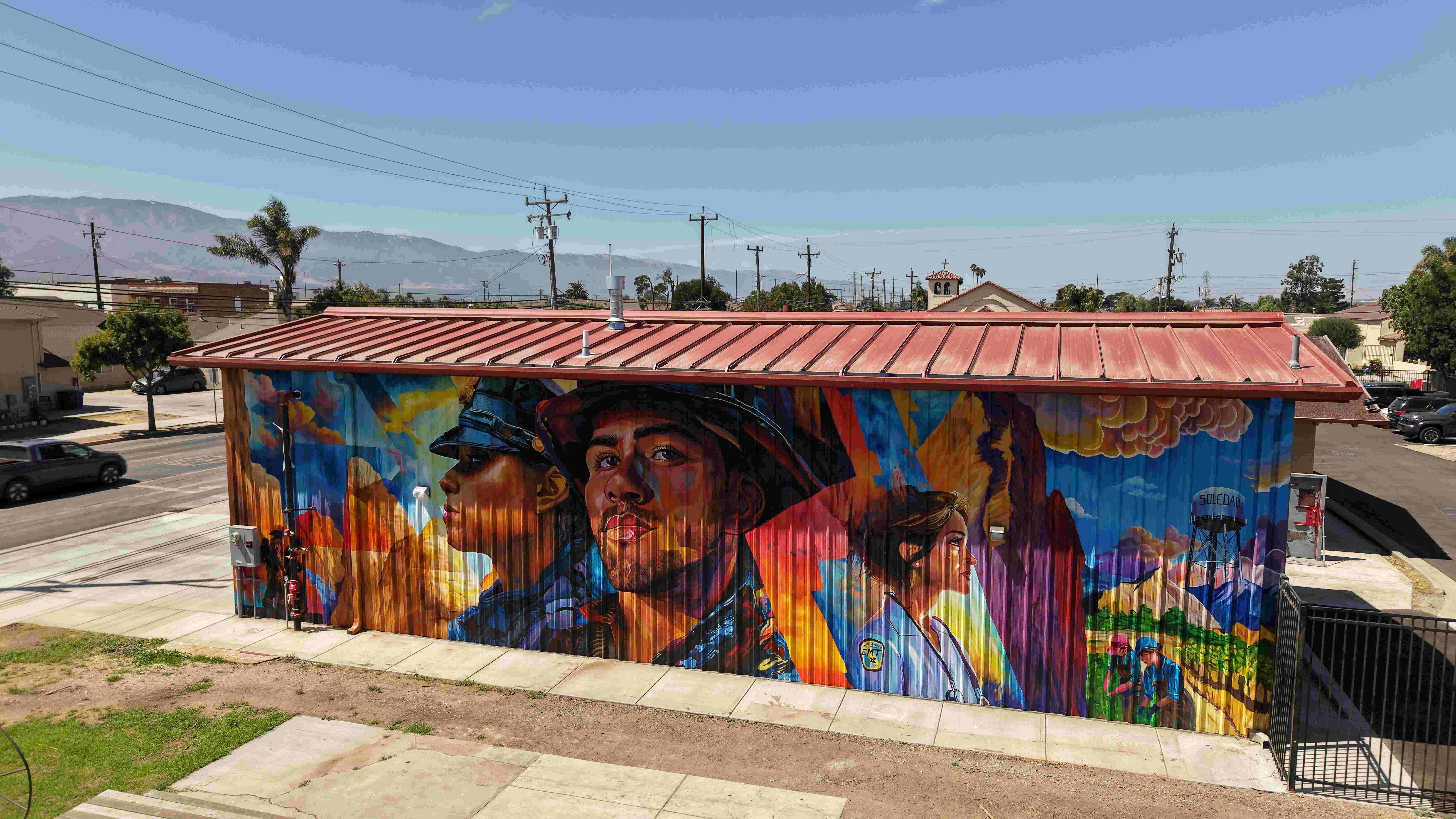
We improve the health and well-being of our local community by addressing environmental, social, and economic obstacles. We are committed to diversity, equity, and inclusion and believe everyone has a voice in shaping Soledad. We engage together as equal partners in local decision-making processes to reduce inequalities and disparities in our community.
Embed Equity in All City Policies, Programs, and Services
- Complete an Equity Impact Assessment for the draft General Plan to ensure that the policies and programs increase equitable outcomes for marginalized populations.
- Require department directors and managers to assess major policies and programs and recommend expenditures through an equity lens.
- Complete an annual Equity Impact Assessment of the Strategic Plan and develop an equity dashboard to measure outcomes.
- Partner with an organization that provides Governing for Racial Equity training and tailors the curriculum to city staff, leadership, and elected officials.
- Schedule mandatory training sessions for all city employees and council members.
- Offer separate leadership-focused workshops for department heads and council.
- Provide equity resource guides and toolkits for applying training to daily work based on real case studies.
Strengthen Inclusive and Equitable Participation in all City Planning and Decision-Making Processes
The City is committed to ensuring that all residents—particularly those historically underrepresented in civic processes—have meaningful opportunities to influence planning and decision-making. Achieving equitable participation requires understanding who engages, who does not, and why.
- Map demographic data and engagement patterns to identify underrepresented communities and participation disparities.
- Analyze past participation in city events, surveys, and advisory boards to understand barriers to engagement.
- Integrate real city data and local case studies into staff training to improve cultural competency and relevance.
- Establish a continuous feedback and evaluation system to measure participant satisfaction, learning outcomes, and training effectiveness.
- Report findings annually to guide resource allocation and improve future engagement efforts.
To build a more inclusive, transparent, and responsive government, the City will update its Community Engagement Strategy to reflect the diverse needs, voices, and experiences of all residents. The updated strategy will establish clear performance measures, embed equity as a guiding principle, and modernize engagement practices to ensure meaningful participation in city planning and decision-making.
- Review the city's current community engagement practices, policies, and outcomes.
- Conduct resident surveys, focus groups, and interviews to gather feedback on communication preferences and barriers.
- Benchmark against best practices from peer cities and national engagement models.
- Develop clear equity-focused engagement principles to ensure inclusion of underrepresented groups.
- Establish measurable goals (e.g., participation rates, diversity of engagement, satisfaction levels).
- Create a multi-channel engagement framework (in-person forums, online platforms, social media, surveys).
- Identify and integrate translation, interpretation, and accessibility services; Consistently, provide interpretation for public meetings in Spanish.
Meaningful community engagement begins with a workforce that reflects the community it serves and possesses the skills, cultural awareness, and empathy to engage residents effectively. The City will strengthen its internal capacity by recruiting culturally representative and bilingual staff, providing continuous training in equitable engagement practices, and ensuring every department integrates community engagement principles into its work.
- Hire culturally representative, multilingual staff who reflect the diversity of the city's residents and bring lived experience to engagement efforts.
- Deliver citywide training on cultural competency, equitable communication, and respectful civic engagement tailored to the local community context.
- Support each department in developing clear, measurable community engagement goals for all public meetings, workshops, and initiatives.
- Train staff on the full spectrum of engagement—from information sharing to empowerment—using a consistent citywide framework.
- Train staff to prepare public-facing materials that are accessible, visually clear, and free of bureaucratic or technical language.
- Establish regular assessments and feedback mechanisms to measure staff competency, inclusivity, and the effectiveness of engagement practices.
To ensure that all residents can fully participate in civic life, the City will prioritize removing language and digital access barriers that limit engagement.
- Provide translated materials and interpretation services in all major community languages, including Indigenous languages such as Triqui and Mixteco, during meetings, workshops, and outreach events.
- Conduct culturally responsive outreach to immigrant indigenous communities in collaboration with community leaders and organizations to ensure inclusion of underrepresented linguistic groups.
- Offer digital access and literacy training for residents unfamiliar with online tools used for surveys, virtual meetings, and city services.
- Develop offline participation options—such as printed surveys, phone hotlines, community liaisons, and in-person engagement events—for residents with limited internet access or digital devices.
- Ensure all digital platforms, websites, and engagement tools meet ADA and language accessibility standards, providing translation, captioning, and screen-reader compatibility.
- Track participation rates by language group and access type to identify ongoing gaps and inform continuous improvement in accessibility efforts.
To build an inclusive and representative civic culture, the City will ensure that all neighborhoods, especially those with lower incomes and historically limited access to civic processes, have equitable opportunities to connect with their elected officials and influence local decision-making. District-based engagement will provide residents with accessible, trusted, and consistent channels to share input, raise concerns, and collaborate on community priorities.
- Assign staff to support each council district with resident communications, event planning, and engagement follow-up.
- Allocate funding for district-level outreach, including translation of materials, community flyers, surveys, mailers, and neighborhood-based events.
- Organize recurring "Walk and Talk," "Coffee with a Councilmember," or "District Dialogue" sessions in diverse neighborhood locations, prioritizing underrepresented and lower-income areas.
- Create a standardized toolkit for council offices outlining best practices for inclusive outreach, equitable meeting facilitation, and use of multiple engagement platforms (digital, print, and in-person).
- Collect and publish district-level engagement data (attendance, demographics, input themes) to identify gaps, celebrate successes, and guide future outreach investments.
- Collaborate with community-based organizations, schools, and neighborhood/homeowners associations to co-host events and strengthen grassroots participation.
Intentionally Allocate Resources to Eliminate Disparities in City Services and Outcomes
The City of Soledad will intentionally direct resources, funding, and staff efforts to neighborhoods and communities that have historically received fewer city services or faced systemic barriers to opportunity. By aligning investments with community needs, strengthening partnerships with local organizations, and building trust through transparency and accountability, the City aims to close equity gaps and ensure that every resident enjoys fair access to quality services, safe environments, and opportunities for success.
- Develop and maintain a comprehensive directory of local service providers and community resources (housing, health, education, employment, etc.).
- Translate the directory into multiple languages and distribute it both online and in print through city offices, libraries, schools, and partner organizations.
- Collaborate with schools, churches, and nonprofits to organize resource fairs and informational workshops connecting residents directly with service providers.
- Train city staff to refer residents efficiently to appropriate community resources.
- Formalize partnerships with trusted local organizations to reach underrepresented residents and improve service coordination.
- Work with partners to extend resources to undocumented immigrants who are facing cuts in aid due to federal policy changes.
- Conduct equity audits to assess city services—such as parks, public safety, housing, and infrastructure—to identify gaps in service quality, accessibility, and investment.
- Use demographic and geographic data to map inequities in service delivery and funding distribution.
- Direct new infrastructure improvements and program funding toward historically under-resourced neighborhoods.
- Develop an equity-based budgeting process to guide future resource allocation and performance reporting.
- Publish annual reports showing measurable changes in access and outcomes by district.
- Streamline application and registration processes for city programs, permits, and grants to make them more user-friendly and language-accessible.
- Offer childcare, translation, transportation assistance, and similar services to increase participation rates in city programs for underrepresented populations.
- Provide technical assistance and public computer access points to help residents navigate online services and applications.
Promote Sustainable Infrastructure and Environmental Resiliency
Develop and implement sustainable, climate-resilient infrastructure that reduces environmental impact, enhances renewable energy use, and promotes equitable access to clean resources and healthy environments.
- Water System Improvements
- Complete well rehabilitation projects to enhance groundwater reliability and system efficiency.
- Replace the Oak Street pipeline to improve water delivery and reduce system loss.
- Rehabilitate existing water storage tanks to extend asset lifespan and improve water quality.
- Implement the Bureau of Reclamation Smart Metering Grant to replace all city water meters, reducing water loss and improving monitoring accuracy.
- Install or upgrade remote-controlled valves, telemetry, and water pressure management systems to enhance operational control and efficiency.
- Complete a comprehensive water assessment study to guide future infrastructure planning and conservation efforts.
- Wastewater System Modernization
- Develop and implement major improvements at the Water Reclamation Facility (WRF) based on the findings of the 2025 WRF Assessment, including:
- Headworks improvements
- Overflow storage basin
- Secondary process upgrades
- Solids handling and dewatering facility improvements
- Effluent disposal and capacity study
- Electrical and control system upgrades
- Levee enhancement and flood protection improvements
- Develop and implement major improvements at the Water Reclamation Facility (WRF) based on the findings of the 2025 WRF Assessment, including:
- Stormwater and Environmental Resilience
- Improve stormwater treatment capacity by lowering the regional recharge basin outlet between Front Street and Highway 101 to enhance groundwater recharge and reduce flooding.
- Ensure all water and stormwater systems meet drought, seismic, and multi-hazard resilience standards.
- Financial and Strategic Planning
- Complete an updated utility rate study to ensure financial sustainability and equitable cost recovery.
- Align capital improvement priorities with available financing mechanisms and explore innovative funding options.
- Engage residents, businesses, and stakeholders in Capital Improvement Program (CIP) prioritization discussions.
- Secure additional state and federal grants to fund critical water, wastewater, and stormwater infrastructure projects.
- Apply for funding to install electric vehicle (EV) charging stations at city facilities and public parking (such as along Front Street), and promote private development to surpass EV charging station code requirements.
- Explore incorporating solar panels at city facilities and public parking lots to facilitate future renewable energy adoption.
- Partner with 3CE or solar and wind providers to install wind or solar arrays to benefit the community.
- Identify and assess city-owned properties suitable for renewable energy installations, such as the decommissioned landfill site.
- Prioritize infrastructure designs that enhance walkability, provide shade, and improve urban air quality in planning and capital projects.
- Raise community awareness about clean energy benefits and how to participate in reducing greenhouse gas emissions.
- Implement the Recycled Water Project by the end of 2026.
- Develop a rate study for users of reclaimed water.
- Highlight recycled water projects in parks and at schools to demonstrate sustainability and reduce potable water demand.
- Reach out to high utility users about the potential to use recycled water for future expansion.
- Consider incorporating purple pipe in major street projects for future use in residential/commercial areas.
- Apply for water sustainability grants to fund the adoption of advanced water reclamation technologies and expand recycled water infrastructure.
- Secure funding and develop a comprehensive Climate Action Plan (CAP) to guide city-wide emission reductions and resilience strategies.
- Incorporate climate mitigation and adaptation measures into the City's General Plan and all relevant planning documents, such as the Capital Improvement Plan.
- Develop and implement a Vehicle Miles Traveled (VMT) reduction policy aimed at decreasing transportation-related carbon emissions.
- Initiate and complete the electrification of the City's vehicle fleet to reduce reliance on fossil fuels.
- Partner with conservation organizations to increase passive recreation open spaces, enhancing urban biodiversity and community health.
- Implement urban heat island reduction strategies such as extensive tree planting and increased green space to cool vulnerable neighborhoods.
- Establish baseline greenhouse gas (GHG) emissions benchmarks across all major sectors (transportation, buildings, waste, and industry) and regularly track and report progress on emissions over time.
- Conduct Environmental Justice (EJ) screenings to identify neighborhoods disproportionately burdened by pollution and climate risks.
- Allocate at least 40-50% of green infrastructure and air quality improvement funds to EJ-identified communities.
- Develop heat action plans for frontline neighborhoods, prioritizing shade tree planting, cooling centers, and energy assistance programs.
- Establish Community Climate Advisory Councils inclusive of historically marginalized populations, with resources to ensure meaningful engagement.
- Require equity impact assessments for all major climate infrastructure and sustainability projects.
- Promote community-led green projects focused on public health improvements and local climate resilience.
- Partner with non-profit organizations to conduct outreach and education to increase awareness about the impacts of pesticide use on human health and the environment and the Health Department monitoring system.
- Collaborate with agricultural stakeholders to design and promote the implementation of agricultural buffer zones between farmland and residential properties.
- Enhance Salinas River health and access
- Continue regular trash and debris removal efforts to improve river water quality and habitat health.
- Collaborate with County agencies and local stakeholders to explore opportunities for developing parks and recreational spaces along the Salinas River corridor.
- Install and maintain surveillance systems to deter and reduce illegal dumping along the river and adjacent areas.
- Secure funding to implement cost-effective improvements for community access, including pathways, seating, and signage, enhancing safe and equitable recreational use of the river.
- Repurpose decommissioned landfill for passive open space
- Conduct feasibility studies and community engagement to evaluate converting the decommissioned landfill site into passive open space, such as nature preserves, walking trails, or picnic areas.
- Create connectivity and multimodal access
- Develop pedestrian and bicycle connections between parks, passive open space, and Bryant Canyon Road.
- Advance urban forestry and greening initiatives
- Develop and implement a comprehensive urban forestry plan that targets tree planting in parks, along streets, and within open spaces.
- Aim to increase tree canopy coverage in vulnerable communities by at least 20% to reduce urban heat island effects and improve air quality.
- Integrate green infrastructure and sustainable design practices into stormwater management to improve water quality and reduce runoff impacts.
- Encourage new developments and public projects to integrate stormwater treatment systems that serve as green spaces, such as bioswales or rain gardens.
- Secure funding and initiate the design phase (FY 25/26) for a stormwater along Nestles Road; Consider the possibility of a roadway daylighting project at the terminus of Nestles Road to restore natural stormwater flow and provide enhanced treatment through natural systems. (Urgent)
4 – Community Places
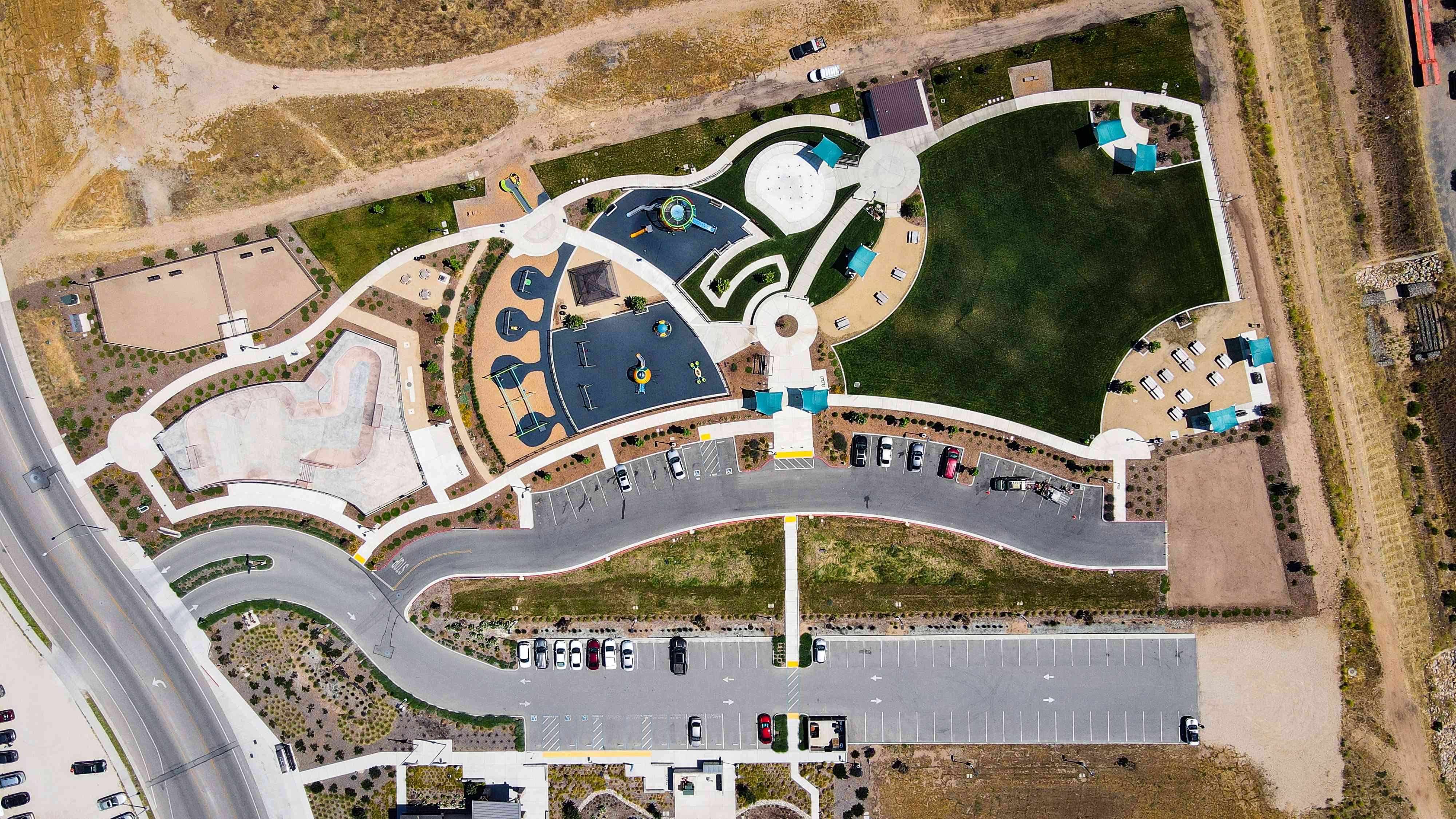
We value parks, public gathering spaces, recreation, cultural events, and vibrant community places that are comfortable and welcoming to all, regardless of age or abilities. We advance our beautiful park and recreation system with amenities that offer moments of play and connection with our neighbors.
Enhance and Expand Public Parks, Open Space, and Community Facilities
- Systemwide Enhancements
- Update the Capital Improvement Plan (CIP) to reflect the recently adopted Parks & Recreation Master and Strategic Plans and to guide future investments and prioritize safety, accessibility, and equitable distribution.
- Install energy-efficient lighting, benches, and safe walking paths in major parks, prioritizing areas with the greatest safety needs.
- Improve wayfinding, signage, and park identity through clear entry signs, informational boards, and "Talk Me Technology" interpretive signs.
- Expand bikeable and walkable connections between neighborhoods, parks, and the Community Center.
- Improve adjacent infrastructure—sidewalks, crosswalks, and street lighting—to support active transportation and daily park access.
- Designate safe walking and activity routes that encourage daily physical activity and neighborhood connection.
- Expand wifi and technology access at parks whenever possible, prioritizing Gallardo/Chester Aaroe Parks.
- Site-Specific Improvements
- Veterans Park:
- Develop a phased improvement plan. Consider designing Veterans Park as a usable wellness-oriented space for seniors and veterans.
- Repair or replace walking paths and install benches near the playground.
- Enhance safety lighting and install a monument honoring veterans.
- Add fitness equipment stations along the pathway.
- Add a monument sign to honor Veterans. (Urgent)
- Vosti Park:
- Update lighting and replace the playground.
- Complete property acquisition at 1232 Monterey for park expansion; consider interim community garden use.
- Chester Aaroe/Gallardo:
- Partner with the Little League and Softball Teams to improve the ballfields at both Chester Aaroe and Gallardo Parks.
- Resurface tennis courts and multi-racket court (Tennis/Pickleball) at Gallardo Park.
- Veterans Park:
- Citywide Tree and Shade Program in Open Spaces and Parks
- Add trees and shade/windbreak structures to improve comfort and environmental quality at Front Street, Veterans Park, Vosti Park, Cesar Chavez Park, Ramirez Park, Santa Barbara Park, Ramus Park, and Peverini/Lum Park.
- Remove dead trees and enhance natural canopies where appropriate.
- Add lighting to Peverini Park for safety.
Expand recreational opportunities and ensure all residents have equitable access to high-quality parks and sports facilities. New park development and field improvements will create vibrant community hubs that support wellness, youth engagement, and neighborhood pride. The City has identified the following key projects:
- Toledo Basin Park (Five-Year Development Plan)
- Complete conceptual design plans and conduct community outreach to inform the park's layout, amenities, and features (Year 1).
- Pursue grant funding and alternative financing methods (e.g., public-private partnerships, state park grants).
- Upon funding approval, initiate phased construction focused on sustainability, accessibility, and recreational diversity.
- Chester Aaroe (Little League Park)/Gallardo
- Reach out to community stakeholders to design a multi-use court at Chester Aaroe, repurposing the area once occupied by a skate park.
- Secure funding for this project and for resurfacing the basketball courts.
- Assess opportunities to repurpose the old skate park area for interim uses such as public art, wellness spaces, or pop-up activity zones until the new court is constructed.
- Santa Blas and Vosti Parks Recreation Enhancement
- Repurpose underutilized volleyball courts into flexible recreational spaces such as basketball, futsal, or pickleball courts based on public input and demand.
- Santa Barbara Park Playground Addition
- Install a new playground that incorporates inclusive and sensory-friendly play features for children of all abilities.
- Apply for a KaBOOM! grant and seek community partnerships to support design and installation.
- Joe Ramirez Park Improvements
- Construct a new multi-use court to accommodate various recreational uses and increase activity options for residents of all ages.
- Long-Term Planning Goals for New Parks
- Prioritize new park sites in underserved neighborhoods to promote equitable access.
- Integrate green infrastructure, native landscaping, and sustainable design principles in all new park developments.
- Ensure connectivity between parks through safe walking and biking routes.
The City has developed plans to transform the Community Center into a modern, inclusive, and resilient facility that meets the diverse needs of residents—serving as a hub for recreation, culture, education, and community connection. Through federal funding, the City has been able to invest over $1.3 million in upgrades, but is launching a capital campaign to raise an additional $1.8 million to finish modernizing the Community Center. The key projects are outlined below:
- Facility Modernization and Accessibility Upgrades
- Upgrade and modernize critical infrastructure to improve safety, efficiency, and compliance:
- Replace or upgrade emergency generator and HVAC systems (including climate control in the gym, which doubles as a disaster shelter).
- Complete ADA restroom and facility upgrades to ensure full accessibility.
- Install dimmable lighting in the gym and multi-purpose areas.
- Improve parking lot infrastructure through slurry sealing, striping, landscaping, lighting, EV charging stations, and trash enclosure enhancements.
- Upgrade and modernize critical infrastructure to improve safety, efficiency, and compliance:
- Expansion and Space Optimization
- Explore expansion options to increase capacity and programming flexibility:
- Add modular buildings on the back patio to provide additional program space.
- Consider a 1,000-square-foot addition to the rear of the large multi-purpose room.
- Add an outdoor classroom adjacent to the small multi-purpose room for educational and cultural programming.
- Achieve commercial kitchen status to allow use by small culinary entrepreneurs.
- Evaluate expanded Saturday hours to better serve the community (subject to additional staffing funds).
- Explore the reuse of the housing units through the Encampment Resolution Funding Program to develop a Teen Innovation Center.
- Continue to work with the Lion's Club to offer city programming at the facility during the remaining three years of the lease.
- Explore potential partnerships with Mission Recreation to utilize Rotary Park for expanded programming and events.
- Explore expansion options to increase capacity and programming flexibility:
Expand Recreational Programming
City residents passed Measure S to enhance quality of life by expanding recreational, cultural, and wellness opportunities citywide. Through collaboration, variety, and accessible design, the City will create a more active and connected community.
- Expand Parks & Recreation Department staffing to support program growth, volunteer coordination, and partnership management.
- Collaborate with local organizations, schools, and nonprofits to co-develop youth, senior, and family-oriented programs.
- Establish a Community Programming Advisory Group to gather input from residents and ensure equitable access to programs citywide.
- Integrate technology access and language support within community centers and park facilities.
- Provide program information and materials in multiple languages and formats that reflect the community's diversity and communication needs.
- Develop an annual citywide calendar of events, both digital and print, that highlights recreational, cultural, and volunteer opportunities.
- Offer fitness, wellness, and health education programs in parks and community centers, including yoga, walking clubs, Zumba, and senior-focused activities.
- Launch "Loneliness Reduction" initiatives and social connection campaigns, promoting outdoor meetups, walking groups, and community challenges.
- Provide shaded seating, picnic areas, and gathering spaces in underserved neighborhoods to support outdoor recreation, relaxation, and community interaction.
- Coordinate cultural festivals, community movie nights, and seasonal events that celebrate local heritage and foster community pride.
- Expand music, visual, and performing arts, craft, and culinary programming at the Community Center for both children and adults.
- Incorporate arts and music spaces within parks, gardens, and plazas to support creative expression and local performers.
- Develop a community garden network, beginning with the proposed garden at Vosti Park, to support intergenerational learning, sustainability, and food security.
- Provide city-supported garden beds for residents, schools, and nonprofits, managed through a shared stewardship model.
- Incorporate educational signage and workshops on native plants, composting, and healthy living to enhance environmental awareness and practical skills.
Promote Historical Preservation and Celebrate Soledad's Culture and Heritage
Preserve and celebrate Soledad's history, landmarks, and cultural heritage through partnerships, programming, storytelling, and public art, ensuring residents and visitors can connect with the city's rich past.
- Initiate discussions with the Historical Society about the overall vision for the Historical Society Building and develop a plan; consider improvements for both a museum and a cultural/performing arts hub.
- Consider short-term improvements for the Historical Society Building.
- Apply for funding for building improvements.
- Create joint programming opportunities such as historical walking tours or lectures.
- Promote Soledad Historical Society as a core partner in citywide cultural initiatives.
- Include Historical Society members in city planning for storytelling and tourism.
- Consult with the California Office of Historic Preservation to explore designation.
- Apply for historical landmark status for qualifying structures.
- Seek state and federal grants for preservation, interpretation, and signage.
- Promote Soledad as a destination on state and regional heritage trails.
- Stabilize the Los Coches Adobe by securing and boarding up.
- Conduct a structural assessment and develop a phased redevelopment plan.
- Install multilingual interpretive signage and visitor amenities at the Adobe.
- Create event programming such as Pioneer Days or cultural heritage nights.
- Host student field trips and educational programs on-site.
- Promote Adobe stories online through video and social media campaigns.
- Develop partnerships with State, County and Big Sur Land Trust to explore the restoration and preservation of Los Coches Adobe landmark.
- Restore physical features and add interpretive displays inside and outside the building.
- Document the stories of veterans, workers, and cultural communities tied to the site.
- Digitize photographs, oral histories, public documents, and cultural artifacts into an online searchable archive.
- Include contributions from Indigenous, immigrant, and farmworker communities.
- Work with schools and families to co-curate content and support intergenerational learning.
- Install physical kiosks in libraries and civic centers to allow residents to browse or contribute stories.
- Complete a public arts plan and policy with a map showing where we want to place public art.
- Extend the mural at the Gateway Center and create an annual program to install at least one mural at a city facility.
- Establish partnerships with local businesses to create a mural program for public-facing walls on private buildings.
- Design and execute a downtown banner program featuring cultural and seasonal themes.
- Launch a rotating public art initiative with both temporary and permanent pieces.
- Implement the public art fee for private development.
- Integrate public art and cultural designs into parks, plazas, and transportation corridors.
- Install plaques and monuments honoring Cesar Chavez, veterans, and notable local leaders.
- Develop Veteran's Park memorial and utilize city facilities and park spaces for naming or renaming in honor of community contributions.
- Highlight community champions through festivals, heritage months, and a "Soledad Hall of Service" recognizing annual honorees.
- Launch storytelling initiatives (e.g., "Flashback Fridays") and build an oral history archive in partnership with schools, elders, and local historians.
- Document and share untold and complex histories, including Japanese internment and labor history, in civic displays and educational programs.
- Engage artists to interpret history through visual, written, or performance art, featuring artwork and quotes from residents of all ages.
- Create multilingual storyboards, QR-linked content, and digital resources to provide accessible historical information.
- Rotate content seasonally or during heritage celebrations to keep exhibits fresh and relevant.
Promote Events, Entertainment, and Social Engagement
- Maintain and expand flagship events such as Hot Summer Days, the Christmas Parade, and 4th of July.
- Establish recurring events with food, music, and local businesses.
- Explore development of a signature "niche" event (e.g., Kite Festival or Wine & Wind Festival) to attract regional visitors.
- Partner with local and regional organizations to co-host and support events.
- Create a multi-lingual annual calendar of events for online, print, newsletters, and social media promotion.
- Develop consistent branding, promotion, and event identity for Soledad.
- Host listening sessions with cultural leaders and non-profit organizations.
- Install seasonal decorations and banners celebrating community identity.
- Support city-led and community-led cultural celebrations and land acknowledgments.
- Highlight contributions of Indigenous, Hispanic, Swiss, Italian, and Anglo communities.
- Feature community honorees and culture bearers at civic events.
- Host free outdoor performances such as "Music in the Park" and seasonal arts events.
- Organize monthly Open Mic Nights, comedy shows, and live music showcases.
- Utilize community centers and Cesar Chavez Park for theater, dance, and spoken word events.
- Rotate themed performances: Jazz Nights, Latin Music Nights, Youth Talent Showcases.
- Partner with schools, cultural groups, and nonprofits to expand performance opportunities.
- Offer weekly or monthly senior programming such as Bingo nights and SOCO Social, integrating senior-focused entertainment into festivals.
- Partner with local senior centers to co-host wellness, game, and social events.
- Ensure venues are accessible and programs serve multiple generations.
- Provide free or low-cost programming through grants and sponsorships.
- Develop partnerships with regional organizations, including the City of Hollister and Monterey County tourism, to expand event reach.
- Establish the Gateway as a resource hub for small businesses and underserved populations.
- Form an event coordination task force of city staff, nonprofits, and community representatives.
- Streamline permitting and promotion processes to support grassroots events.
- Host quarterly convenings of community event partners to align programming and maximize impact.
Improve City Facilities and Create New Community Spaces
- Identify, activate, and maintain indoor and outdoor gathering spaces citywide.
- Co-locate services such as Amazon lockers, senior resource centers, and veteran business hubs within these spaces.
- Support extended-hour or mobile gathering models using temporary structures, pop-ups, or seasonal installations.
- Implement public Wi-Fi coverage across all major parks, downtown, and community facilities.
- Ensure broadband access planning is coordinated with South County tech efforts.
- Promote tech access in city spaces as part of business and tourism development.
The City is responsible for ensuring all facilities are safe, accessible, modern, and sustainable while maximizing community use.
- Conduct a citywide inventory of facilities including usage, accessibility, and safety audits.
- Key Projects:
- Police Station: Roof improvements; Locker remodel; Task Force Building upgrades.
- Fire Station: Structural, roof, and kitchen improvements.
- City Hall: Roof repairs and HVAC upgrades.
- Soledad Water Tower (Vosti Park): Identify funding sources for critical railing repairs, exterior rehabilitation, and beautification.
- Add a second flag pole with lighting capabilities for City Hall (Urgent).
- Evaluate feasibility of merging or partnering on recreational/open space districts.
- Explore co-use of school district ballfields and facilities.
- Prioritize underutilized assets for activation, redevelopment, or repurposing.
- Integrate sustainability, climate resilience, and energy efficiency into facility planning.
- Ensure ADA compliance and universal design standards in all facilities.
- Gather input from disability, senior, and equity advocates during planning.
- Design signage, wayfinding, and digital tools to be multilingual and accessible.
- Publish public dashboards to track accessibility, inclusion, and community engagement metrics.
Strengthen Community Services, Engagement, and Social Support
- Develop a central facility for residents to access housing navigation, benefits support, legal aid, health education, workforce development, and financial coaching.
- Partner with local organizations (e.g., CRLA, Promotors) to provide bilingual and culturally responsive services.
- Offer language-accessible hours, childcare, transportation assistance, and mobile service options for residents with nontraditional schedules.
- Include multipurpose spaces for classes, pop-up clinics, wellness programs, technology help, nutrition education, grief support, and intergenerational activities.
- Integrate cultural artwork, peer-led programming, and intergenerational activities to foster social connection and reduce isolation.
- Expand senior services, including case management, wellness, and caregiving support.
- Ensure ADA compliance and partner with local transportation providers to improve access for homebound residents.
- Provide Wi-Fi, refreshments, and culturally relevant media and activities to encourage participation.
- Host quarterly neighborhood meetings in rotating locations with translation, childcare, mobility assistance, and refreshments.
- Organize deliberative forums that promote dialogue and consensus, integrating feedback into budget and program planning.
- Train staff and community partners in multilingual and intergenerational facilitation.
- Share meeting summaries online, via utility bills, and in newsletters for transparency.
- Launch a citywide volunteer matching system aligned with interests, age groups, and availability.
- Host volunteer fairs, youth internships, and peer mentoring programs connecting seniors, teens, and new immigrants.
- Recognize civic contributors through council meetings, newsletters, and public displays.
- Support pop-up civic services such as voter registration, legal clinics, and health screenings.
- Promote partner-led events through city platforms and digital communications.
5 – Mobility
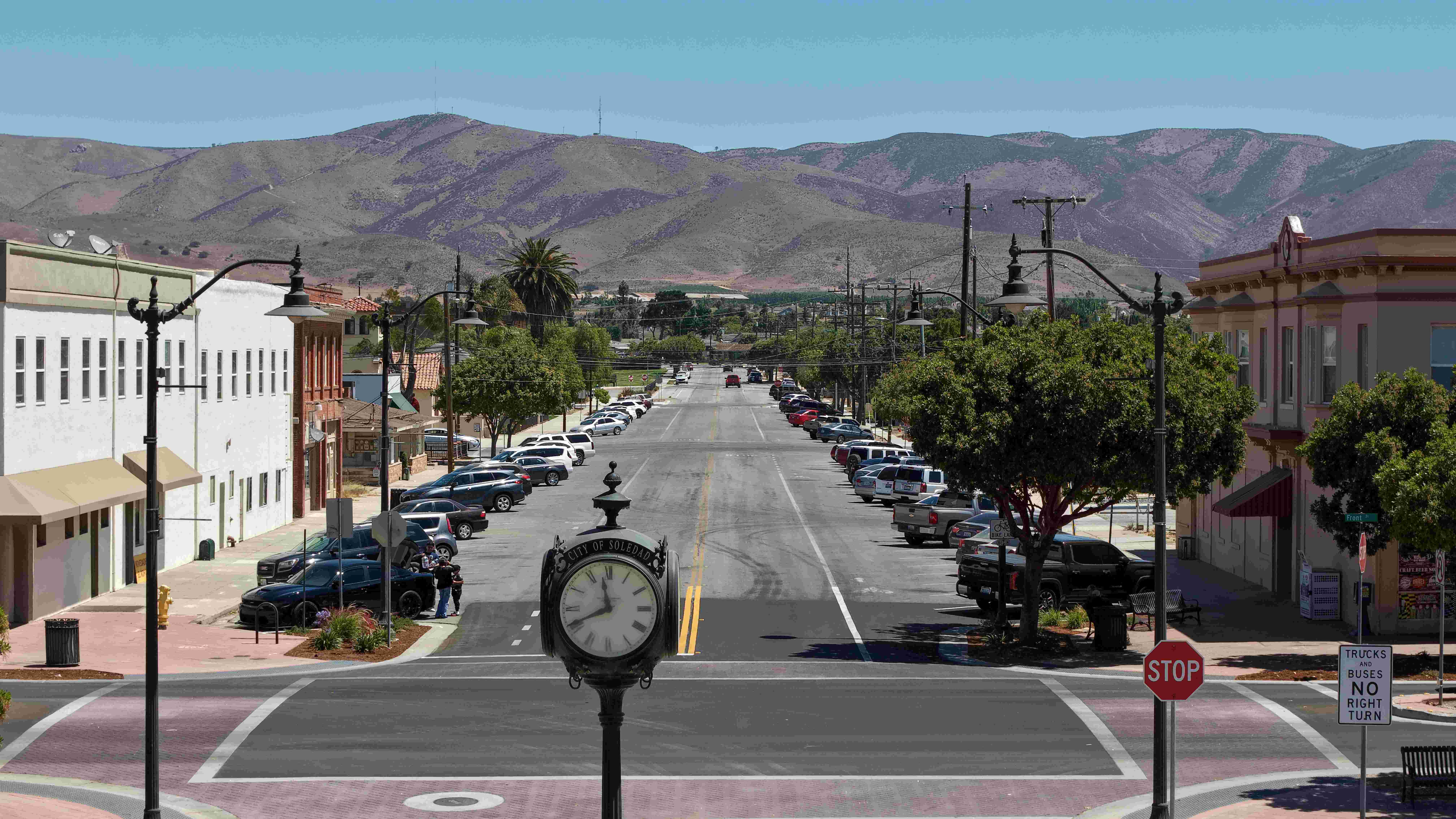
We have high-quality road and public transit systems that help prevent traffic fatalities and severe injuries, minimize traffic congestion, and allow convenient access to daily destinations. We are proud of our safe, walkable, accessible, and bikeable neighborhoods that promote non-automobile modes of transportation.
Promote Active Transportation and Pedestrian Safety
Promote safe, convenient, and connected options for walking and biking by developing new Active Transportation Program (ATP) corridors and infrastructure.
- Collaborate with TAMC to resubmit the Soledad Safe Routes to School Project (SSRTS) for Active Transportation Program (ATP) implementation funding through Caltrans and other applicable funding sources.
- Apply for funding for smaller ATP projects in the SSRTS for implementation.
- Design improvements to the Front Street underpass based on the pilot project, including reconstructed sidewalks, ADA accessibility, bike lanes, and improved light and drainage.
- Implement the West Street Complete Street Project (Road Diet), including a lane reduction, improved crossings, and additional bike and pedestrian amenities.
- Complete construction plans and bidding package.
- Select a qualified contractor to build the improvements and initiate construction.
- Evaluate traffic speeds, collision data, and community feedback before and after implementation.
Expand the city's bikeway network to provide safe, continuous, and convenient routes for all users.
- Implement a phased buildout of Class II and Class III bike lanes across neighborhoods.
- Install Class IV protected bike lanes along key arterials with high vehicle volumes.
- Add bike signage, sharrows, and wayfinding along major and secondary roads.
- Maintain real-time online maps and printed materials for bike routes and facilities.
- Replace damaged or install new bike racks at key downtown hubs, parks, and schools.
- Partner with regional transit agencies and nonprofits to launch bike rental or bike-share programs.
- Partner with the Soledad Unified School District to promote active transportation to school as outlined in the Safe Routes to School Plan:
- Host pop-up bike repair clinics, student-led maintenance days, and community ride events.
- Launch "Walk and Roll to School" and "Walk to Work" campaigns.
- Launch education campaigns promoting walking, biking, and transit use among students.
- Engage youth to create videos, murals, and posters near school sites to encourage walking or biking to school.
- Pilot a walking school bus or enhanced crossing guard program at selected school sites to promote safe, active commuting for students.
- Hold school-based bike safety education and group ride events.
- Provide helmet giveaways and lighting kits to improve student cyclist safety.
- Expand community bike donation drives to support low-income riders.
- Support walking and wellness through community partnerships:
- Launch a citywide walking campaign with branded signage, maps, and neighborhood loops.
- Partner with health organizations to link walking paths with wellness check-in stations.
- Incorporate walking goals into community events, step challenges, or Blue Zones promotion.
- Create scenic walking trails with rest stops, historical signage, and nature features.
- Celebrate local 'Walk to Work' and 'Walk to School' days through city promotion.
- Monitor and analyze program participation to guide and improve future active transportation education initiatives.
Advance Vision Zero by Implementing the Safe Routes to School Plan and Other Safety Improvements
Achieve zero traffic-related fatalities and severe injuries through data-driven design, education, enforcement, and collaboration. Improve safety for all users—especially pedestrians, cyclists, students, and seniors—across Soledad's transportation network.
Enhance the safety, accessibility, and comfort of routes to and from schools through coordinated infrastructure and education efforts.
- Deliver Funded Projects through the Safe Routes to School Program including:
- Pedestrian improvements at Orchard Ln & Gabilan Dr (Jack Franscioni ES).
- Intersection improvements at Main St & Gabilan Dr (Pinnacles HS).
- Pedestrian upgrades at Benito St & Gabilan St (Soledad HS).
- Sidewalk and safety enhancements on Orchard Ln (San Vicente ES).
- Align curb colors, loading zones, and crosswalks with updated circulation and campus access plans.
- Adopt citywide school zone safety standards (speed limits, signage, and crossing treatments) consistent with state law.
- Launch a Back-to-School Safety Campaign via newsletters, social media, and city channels.
- Host annual joint city–school traffic safety planning sessions.
- Engage students in safety awareness through youth-designed videos, posters, and murals near school sites.
Reduce traffic congestion and conflicts near schools by improving circulation, signage, and visibility.
- Assess and redesign school drop-off loops to reduce bottlenecks and improve pedestrian safety.
- Integrate parent and guardian orientation modules on safe drop-off/pick-up practices.
- Restripe and add directional arrows to clarify one-way flow and entry/exit points.
- Install stop signs, cones, and crossing supervision during peak hours.
- Engage with the School District to explore adjustments to school start times in areas where traffic impacts are significant.
- Ensure reflective, multilingual, and ADA-compliant signage at all school driveways, including no-U-turn and directional signs.
- Evaluate signage effectiveness through field observation and community feedback.
Reduce pedestrian and cyclist injuries by improving infrastructure, visibility, and installing traffic-calming features citywide. Key Implementation Programs: HSIP 10 (Highway Safety Improvement Program), Safe Routes to School, Vision Zero
- Install speed bumps, flashing beacons, and pedestrian signage in high-traffic and school zones.
- Repaint and refresh crosswalks, school zones, and road markings annually.
- Integrate Class II or III bike lanes where feasible to promote safe multimodal travel.
- Upgrade streetlights and pedestrian-scale lighting in priority corridors and intersections.
- Evaluate and install curb extensions, raised medians, or pedestrian refuges to slow vehicle speeds.
- Develop a citywide walkability map to prioritize sidewalk and ADA upgrades.
- Conduct pedestrian safety audits around schools, parks, and civic buildings to identify crossing and lighting gaps.
- Install tactile paving, ADA ramps, and accessible push-button signals at major intersections.
- Promote community participation through events like "Walk to School Week" and neighborhood walking events.
Reduce speed-related and distraction-related crashes through data-driven enforcement and technology.
- Conduct targeted enforcement in school zones and high-collision corridors.
- Deploy mobile and fixed radar feedback signs to encourage compliance.
- Publish an annual enforcement impact report tracking violations, speed trends, and safety outcomes.
- Use collision and citation data to inform enforcement priorities and community outreach.
Foster a culture of safety and shared responsibility among drivers, pedestrians, and cyclists.
- Launch a citywide campaign on speeding, distracted driving, and pedestrian safety using posters, yard signs, digital content, and social media.
- Distribute driver safety tips via utility bills, newsletters, and city accounts.
- Partner with schools, youth groups, and businesses to expand outreach and reinforce safe driving messages.
- Develop multilingual educational materials to ensure accessibility for all residents.
Secure sustainable funding and partnerships to implement high-impact safety projects.
- Develop a prioritized list of shovel-ready projects with cost estimates and safety impact metrics.
- Bundle small-scale projects into competitive grant applications to maximize funding potential.
- Host annual grant coordination workshops among engineering, planning, and police staff.
- Incorporate crash data, community input, and equity considerations into all safety funding proposals.
- Pursue collaboration with regional agencies (TAMC, Caltrans, Blue Zones) to align Vision Zero goals and leverage resources.
Enhance Public Transit, Senior Mobility, and Regional Connectivity (Regional)
Improve access, safety, and convenience for residents, seniors, workers, and visitors through coordinated regional transit, micro-mobility, and infrastructure investments. Strengthen partnerships with regional agencies and neighboring cities to create an equitable and connected transportation network.
Ensure equitable, reliable, and accessible transit options that meet the mobility needs of all Soledad residents, particularly seniors, farmworkers, and underserved populations.
- Partner with Monterey–Salinas Transit (MST) to expand in-town service frequency and update routes based on ridership data and community input.
- Ensure all bus stops have adequate lighting, seating, shelter, and ADA-compliant access.
- Develop micro-transit or neighborhood shuttle pilots with flexible, on-demand scheduling for first/last-mile connectivity.
- Produce multilingual transit access map highlighting routes, stops, and service options for underserved residents.
- Explore subsidized ride-share or voucher programs (Uber/Lyft) for essential medical, employment, and educational trips.
- Host regular community feedback forums and online surveys to assess transit satisfaction and identify unmet needs.
- Expand Parks & Recreation Travel Program for Seniors for affordable local and regional excursions.
- Coordinate with local organizations, clinics, and agricultural employers to provide transportation for seniors and farmworkers, including extended-hour routes for H-2A workers.
- Establish Transportation Liaison to assist seniors, non-English speakers, and agricultural workers in navigating transit options.
- Collaborate with health/wellness organizations to align medical appointment shuttles with existing schedules.
Enhance transit connections between Soledad, regional attractions, and neighboring cities to support economic development and sustainable tourism.
- Partner with Pinnacles National Park, MST, and the City of Hollister to pilot a regional shuttle connecting Downtown Soledad, Pinnacles NP, and major visitor destinations.
- Promote Soledad as the southern gateway to Pinnacles National Park via marketing and MST route branding.
- Collaborate with local hotels, wineries, and tourism operators to develop bundled lodging + transit experiences.
- Seek regional/inter-jurisdictional grants for tourism shuttle infrastructure and park-and-ride facilities.
- Coordinate with Monterey County, Hollister, and Caltrans District 5 on long-term mobility strategies.
Enhance safety, function, and aesthetics of Highway 101 interchanges and corridors serving Soledad's community and regional economy.
- Collaborate with Caltrans to design and implement safety upgrades to Highway 101 ramps (Front Street and gateway areas).
- Improve lighting, signage, lane striping, and visibility near ramps for driver and pedestrian safety.
- Coordinate ramp/interchange design with city pedestrian and bicycle network improvements for seamless connectivity.
- Conduct public outreach to engage residents and nearby businesses on ramp improvement designs.
- Integrate future transit and commercial corridor growth into long-term corridor planning.
Expand regional connectivity by linking Soledad's trail system to neighboring cities and regional routes.
- Partner with the Transportation Agency for Monterey County (TAMC) to develop a regional trail and bikeway plan connecting Soledad, Gonzales, and Greenfield.
- Collaborate with TAMC and Monterey County to plan and design a segment of the Salinas River Trail through Soledad.
- Work with the County and TAMC to evaluate a trail connection from the old landfill site into town, integrating with city parks and bike networks.
- Ensure trail and bikeway connections link key destinations—schools, parks, neighborhoods, and commercial areas.
- Coordinate with regional partners and funding agencies to align trail alignments and pursue joint grant applications for design and construction.
Improve Traffic Management, Road Safety, and Infrastructure
Enhance roadway efficiency, safety, and durability through data-driven congestion management, proactive maintenance, and the integration of smart mobility technology. Ensure Soledad's transportation network supports growth, accessibility, and long-term sustainability.
Reduce congestion and improve safety by reconfiguring key intersections and corridors using modern design standards and context-sensitive solutions.
- Construct modern roundabouts or other intersection improvements where feasible to enhance safety and traffic flow.
- Conduct traffic signal coordination and optimization studies to improve performance along major corridors.
- Implement smart signal technology with adaptive timing to respond to real-time conditions.
- Enforce truck routes to divert heavy vehicles from residential and sensitive corridors. (Urgent)
- Collaborate with Caltrans and regional agencies to evaluate the feasibility of new Highway 101 exits or ramp improvements that reduce local congestion.
- Upgrade lane striping, signage, and turn guidance to eliminate bottlenecks and improve wayfinding.
- Engage the community in corridor redesign to balance mobility, safety, and neighborhood quality.
Preserve and extend the lifespan of city streets and sidewalks through preventive maintenance, coordinated utility planning, and performance-based investment.
- Slurry Seal & Micro-Surfacing Program (Year 1): Expand annual pavement preservation activities in alignment with the Pavement Management Program.
- Sidewalk Replacement Program: Conduct a comprehensive assessment of sidewalks and needed ADA improvements to prioritize maintenance and upgrades.
- Implement a five-year rolling Capital Improvement Plan (CIP) to guide street reconstruction and rehabilitation.
- Coordinate with utility providers to minimize redundant excavations and reduce road disruption.
- Integrate Pavement Condition Index (PCI) data into annual budgeting and project prioritization.
- Upgrade street signs, reflective striping, and pavement markers during resurfacing to enhance visibility and nighttime safety.
Use technology and real-time data to improve traffic flow, enhance safety, and support proactive infrastructure management.
- Deploy traffic sensors, cameras, and vehicle-counting devices to monitor congestion, speed, and travel times along key corridors.
- Implement adaptive signal control systems that adjust light timing dynamically based on vehicle and pedestrian demand.
- Create a citywide traffic data dashboard to inform staff, emergency responders, and the public of real-time conditions.
- Integrate GPS and GIS-based analytics into maintenance scheduling and traffic management.
- Pilot smart parking and curb-management technologies in downtown or school-adjacent zones to improve turnover and reduce circling.
- Collaborate with regional transportation agencies and Caltrans to share mobility data and synchronize corridor performance.
- Utilize data from radar feedback signs and crash reports to identify high-risk locations and prioritize safety improvements.
- Explore grant funding under SMART Grants, HSIP, ATP, and Caltrans Technology Innovation Programs to support implementation.
Promote Beautification, Streetscape Design, and Community Placemaking
Enhance Soledad's visual identity and mobility experience through cohesive streetscape design, landscaping, art, and community-centered public spaces. Prioritize corridors and connections that promote walkability, safety, and civic pride.
Create unique streetscapes that are inviting and memorable, celebrating Soledad's character, improving mobility, and strengthening community identity.
- Develop a more detailed streetscape plan for Downtown based on the ELS design concept.
- Develop a comprehensive corridor design plan from Highway 101 to Downtown that aligns with Complete Streets principles and local character.
- Develop branding and design guidelines for public furniture, lighting, signage, and paving to ensure visual consistency across city projects.
- Upgrade and unify wayfinding and directional signage guiding residents and visitors to Downtown, Pinnacles National Park, parks, and civic destinations.
- Expand and illuminate gateway monument signage that reflects Soledad's identity as the "Gateway to Pinnacles."
- Complete the Front Street Landscape Project (also in Chapter 4: Community Places).
- Install native, drought-tolerant landscaping and decorative fencing along the freeway-facing side of Front Street and other key gateways.
- Integrate public art, murals, and sculpture installations at underpasses, bridges, and high-visibility entry points.
- Encourage temporary and permanent art installations, including murals, pop-up exhibits, and artist-led streetscape enhancements.
- Collaborate with schools, cultural groups, and local artists to celebrate Soledad's agricultural heritage and diversity through art and landscape themes.
- Incorporate cultural storytelling, interpretive signage, and historical markers along key corridors.
- Coordinate with Caltrans, Monterey County, and TAMC for shared investment in corridor beautification and maintenance.
- Host community beautification days, art walks, and planting events that engage youth and local organizations.
Enhance walkability, recreation, and neighborhood cohesion through attractive, safe, and connected greenway and trail networks.
- Install pedestrian-scale lighting, benches, and wayfinding signage along key greenways and neighborhood connectors.
- Develop an interconnected walking trail system linking Gabilan Plaza, local schools, residential developments, and park facilities.
- Incorporate shade trees, fitness equipment, rest areas, and art installations along connector paths to encourage everyday use.
- Establish consistent streetscape design standards across residential frontages, trails, and adjacent public spaces.
- Collaborate with developers to integrate sidewalk, landscape, and public art features into new subdivisions to support active lifestyles and visual cohesion.
Increase shade, comfort, and environmental resilience by expanding Soledad's urban tree canopy and green infrastructure. (Some of these goals are also found in Chapter 3, Environmental Justice and Equity)
- Implement a 5-Year Urban Forestry and Canopy Plan to plant native shade trees along parks, sidewalks, medians, and public buildings.
- Launch an "Adopt-a-Tree" program to engage residents, businesses, and community groups in ongoing tree planting and maintenance.
- Prioritize native and drought-tolerant species that support biodiversity and reduce water use.
- Integrate green infrastructure elements such as rain gardens and permeable surfaces into streetscape projects to manage stormwater sustainably.
- Include urban forestry metrics (canopy coverage, tree survival rate, and species diversity) in annual beautification reports and grant proposals.
Increase Mobility Innovation and Future Planning Capabilities
Advance Soledad's transportation planning capacity through technology, transparent project management, and forward-thinking mobility innovation. Build systems that enable efficient, equitable, and sustainable delivery of infrastructure improvements.
- Resubmit the Planning funding application for the Pinnacles Parkway Project to establish a second grade-separated crossing, create a multi-modal corridor, and construct two roundabouts connecting the east end of Los Coches Road to Metz Road.
- Collaborate with residents to identify and design a pedestrian railroad crossing near Palm Avenue and 8th Street, as recommended in the General Plan.
- Pursue opportunities to design and construct a third highway ramp to improve emergency access and overall mobility in Soledad, which currently has only two ramps.
Improve accountability, coordination, and public engagement by making capital projects and budgets accessible in real time.
- Develop an online CIP dashboard showcasing all active and planned transportation and infrastructure projects.
- Include timelines, budgets, milestones, and funding sources, updated quarterly or in real time.
- Integrate community feedback tools to allow residents to comment and ask questions about projects directly.
- Ensure the platform is mobile-friendly and available in English and Spanish.
- Promote the dashboard at budget workshops, planning forums, and community meetings to increase transparency.
- Train department heads and project managers to maintain up-to-date information and coordinate data entry across departments.
- Complete the nexus study and update the current transportation impact fee to include Miramonte.
- Update the transportation impact fee after the completion of the General Plan if needed.
- Engage developers, regional agencies, and community stakeholders to align fee structures with infrastructure timelines.
- Adjust fee programs to support infill and affordable housing while maintaining fiscal sustainability.
- Publish annual transparency reports showing how fees are collected and invested in infrastructure.
- Leverage impact fee revenue to secure regional and state grants for transportation and multimodal improvements.
Leverage city-owned and surplus land to advance long-term mobility goals and connectivity.
- Identify city-owned and underutilized parcels for future use as trailheads, mobility hubs, park-and-ride lots, or shared-ride zones.
- Ensure compliance with the State Surplus Lands Act while maximizing local community benefit.
- Collaborate with regional planning agencies to establish mobility-supportive zoning for identified parcels.
- Prioritize parcels connecting affordable housing, parks, and transportation corridors.
- Incorporate surplus land analysis into the City's General Plan and Capital Improvement Program (CIP).
- Explore public-private partnerships (P3s) for EV charging, shared micro-mobility, or logistics staging areas.
Position Soledad as a regional leader in smart and sustainable mobility by piloting innovative technologies and building collaborative partnerships.
- Partner with TAMC, MST, and Caltrans to pilot smart mobility technologies, such as adaptive traffic signals, connected vehicle sensors, and real-time travel data platforms.
- Expand electric vehicle (EV) charging infrastructure in city-owned parking lots, community centers, and transit hubs. (Urgent)
- Launch a Smart Corridor Pilot Project integrating real-time traffic monitoring, dynamic signage, and pedestrian sensors to enhance safety and efficiency.
- Develop a data-sharing framework with regional agencies to align transportation, environmental, and public safety data systems.
- Explore micro-mobility programs (e-scooters, e-bikes) to expand first- and last-mile connectivity between neighborhoods, schools, and downtown.
- Pursue state and federal innovation grants (e.g., SMART, Carbon Reduction, Clean Mobility Options, ATP) to fund pilot projects.
- Incorporate climate resilience and carbon-reduction metrics into all transportation planning and reporting.
- Host annual Mobility Innovation Forums to showcase new technologies and invite feedback from residents, students, and businesses.
6 – Safety
We prioritize a safe and open community with streets that have ample lighting, well-maintained sidewalks and roads, highly visible crosswalks, protected bike lanes, and convenient freeway access that accommodates routes for emergency evacuation. Our safety and law enforcement providers are our partners in preventing crime, developing community-based intervention programs, and preparing for emergencies. We are committed to building long-term resilience and embracing environmental sustainability to protect all residents from negative environmental impacts.
Strengthen Community Trust and Public Safety through Partnership and Community Policing
Community safety depends on strong, trusting relationships between residents, law enforcement, schools, local and regional organizations. This strategic goal emphasizes expanding community policing initiatives, increasing transparency, and fostering proactive engagement to prevent crime, reduce youth violence, support crime victims, and protect vulnerable populations.
The City will build stronger communication, trust, and cooperation between law enforcement and the community by providing consistent and meaningful opportunities for engagement. These initiatives will focus on transparency, accessibility, and cultural understanding, ensuring that every resident, regardless of background or immigration status, feels safe and comfortable interacting with police personnel.
- Expand community policing initiatives by maintaining regular neighborhood patrols and hosting informal engagement events such as "Coffee with a Cop", "Taco with a Cop", and "Pizza with a Cop" in parks and neighborhoods.
- Continue collaborating with local organizations and immigrant advocacy groups to host workshops that reaffirm the City's policy of not cooperating with ICE and its commitment to not asking about documentation status, while promoting the reporting of crimes and community concerns.
- Offer training sessions on digital safety and recognizing misinformation for parents, caregivers, and community members.
- Establish a youth-led media team to create public service announcements (PSAs) online, focused on safety and community trust, shared through social media and local media channels.
- Raise awareness of domestic violence prevention resources through public outreach campaigns and partnerships with health and social service organizations.
- Offer pedestrian and driver safety education programs in areas surrounding schools, parks, and the downtown corridor.
- Inform community members about how to identify and report online scams and misinformation.
- Create and share multilingual infographics, videos, and public service announcements through local radio, television, and digital platforms.
- Establish policies for timely, multilingual communication during emergencies and other high-impact events.
- Train staff in proactive misinformation management, including social media monitoring and factual corrections.
- Integrate city communication channels into a centralized, mobile-friendly platform for alerts and information.
- Offer public workshops to help residents access, verify, and engage with official city information sources.
The City will implement Crime Prevention Through Environmental Design (CPTED) principles in all public spaces and capital improvement projects to enhance safety, deter crime, and create vibrant, welcoming environments. By integrating CPTED strategies into planning, design, and maintenance, the City will create spaces that encourage positive community engagement, enhance visibility, and foster a greater sense of security and civic pride.
- Integrate CPTED in Planning and Design:
- Integrate CPTED principles, such as improved lighting, clear sightlines, and natural surveillance, into all capital projects, development reviews, and infrastructure designs.
- Ensure CPTED design elements are required for all new development projects, public facilities, and park improvements.
- Design public restrooms, plazas, pathways, and courtyards to reduce hidden areas while improving visibility, accessibility, and perception of safety.
- Use strategic landscaping, seating, and wayfinding signage to support natural surveillance and encourage appropriate public use.
- Apply safety-focused design strategies to all park planning, beautification, and streetscape projects to foster active, inclusive, and secure community spaces.
- Improve Lighting and Visibility:
- Conduct a citywide audit of lighting in neighborhoods, parks, and key corridors to identify gaps and prioritize safety improvements.
- Upgrade existing street and facility lighting to energy-efficient LED fixtures for improved visibility, lower maintenance costs, and long-term sustainability.
- Install pedestrian-scale lighting in Downtown areas, near schools, at park entrances, and along walking routes to enhance safety and accessibility.
- Coordinate lighting improvements with sidewalk, stormwater, and other capital projects to minimize disruption and maximize efficiency.
- Apply equity-based criteria to prioritize lighting projects, focusing on underserved and high-need neighborhoods.
- Maintain requirements for street lighting upgrades in new development to ensure consistent visibility and safety citywide.
- Address Blight and Environmental Safety:
- Collaborate with Planning, Code Enforcement, and Public Works to address visible blight, vandalism, and environmental conditions that affect perceptions of safety.
- Implement maintenance and landscaping standards that enhance cleanliness, visibility, and long-term safety in public spaces.
- Align CPTED strategies with ongoing beautification, infrastructure, and community engagement initiatives to ensure consistency and sustainability.
By fostering collaboration among schools, families, and community organizations, the City will support youth safety, prevent violence, and encourage positive development through education and mentorship programs.
- Collaborate with the Soledad Unified School District to refine and implement the existing School Safety Program and finalize the Memorandum of Understanding (MOU).
- Establish a police liaison to improve communication and engagement with students.
- Partner with Monterey County to complete the Build Safe and Thriving Communities Action Plan (Youth Violence Prevention Action Plan).
- Re-establish and expand the Explorer's Program to include both the Police and Fire Departments, promoting early exposure to civic careers and leadership opportunities.
- Formalize school-police partnerships for daily safety checks and joint community-building activities.
- Conduct anti-bullying and violence prevention workshops, co-led by youth leaders and school counselors.
- Create a confidential reporting app or text line for students to share safety concerns.
- Coordinate with school administrators on incident response protocols and campus safety.
- Host youth town halls to address safety needs, online behavior, and conflict resolution.
- Conduct safety audits of senior housing, care facilities, and common gathering sites.
- Provide training for police officers and city staff on dementia awareness, elder abuse identification, and respectful communication.
- Launch a Senior Wellness Check Program, including phone outreach for isolated individuals.
- Partner with senior service providers to host pop-up workshops on scam awareness, digital safety, and personal protection.
Strengthen the Capacity of the Police Department through Recruitment, Retention, and Strategic Investment
The City will strengthen the effectiveness, resilience, and community trust of the Police Department by cultivating a skilled and well-supported workforce, modernizing technology, and upgrading facilities and equipment.
- Broaden the recruitment pipeline by reopening and promoting the Police Cadet program to attract diverse local talent and maintain a steady flow of qualified applicants.
- Foster internal talent by mentoring and supporting internal candidates toward pursuing a career in law enforcement.
- Promote officer well-being by increasing access to wellness programs, peer support, and mental health services for officers and first responders.
- Invest in ongoing professional development by providing regular training on updated laws, de-escalation tactics, and community engagement to ensure professionalism and accountability.
- Cultivate future leadership by promoting a sergeant to a new lieutenant position and implementing a succession plan to develop the next generation of department leaders.
- Improve retention by evaluating and implementing retention incentives such as housing support, career advancement opportunities, and performance-based pay to reduce turnover and increase job satisfaction.
- Complete the upgrade of the Police Department servers.
- Upgrade Camera Systems: Transition existing cameras to the Flock Safety platform to enhance investigative capacity and real-time response.
- Improve Body-Worn Camera Program: Evaluate and upgrade to a more reliable, secure, and integrated body-worn camera system.
- Assess Records Management Tools: Review TracNet's long-term viability as the department's Records Management System and identify modern alternatives if needed.
- Evaluate software needs to consolidate programs and use new applications to improve efficiency.
- Upgrade protective gear by replacing aging bulletproof vests and helmets with state-of-the-art protective equipment that meets current safety standards.
- Replace obsolete tasers with the latest supported models to ensure reliability and compliance.
- Complete critical repairs (roof/HVAC) and upgrade the lockers.
- Assess the Task Force Building and consider a future rehabilitation plan.
- Enhance the work environment by reconfiguring the space to accommodate the workforce and investing in ergonomic and functional furniture to support productivity and morale.
Improve Animal Control Services and Code Enforcement
- Support the establishment of an SPCA clinic in Soledad to expand affordable veterinary and sterilization services. (Urgent)
- Partner with animal welfare organizations to expand foster networks and implement humane catch-and-release programs for community cats, accompanied by education and outreach to reduce feral cat populations.
- Target a 20% increase in spay/neuter service capacity within three years through partnerships, grants, and city funding, as available.
- Maintain sustainable city funding for animal control operations and strategic community incentive programs.
- Track, monitor and report annual reductions in stray populations and shelter overflow, adjusting strategies as needed.
To improve efficiency and quality of service, the City will explore the creation of a regional animal services facility in partnership with neighboring jurisdictions. This shared model can help reduce costs, improve service reach, and improve care for animals across South County.
- Collaborate with South County cities and agencies to plan a shared regional animal services facility.
- Develop cost-sharing models and interlocal agreements to ensure equitable contributions and benefits.
- Conduct feasibility and cost-benefit analyses to determine optimal facility size, location, and operational framework.
- Engage community stakeholders, animal advocates, and welfare organizations for input on facility design and programming.
- Review and apply best practices from other regional animal service partnerships in California.
- Develop a phased implementation plan outlining milestones, funding sources, and departmental responsibilities.
- Explore funding options available.
- Conduct a comprehensive review of outdated ordinances in collaboration with the Police Department, Community & Economic Development Department (Community & Economic DevelopmentD), and City Attorney's Office.
- Update municipal codes to align with current community needs, standards, and equitable enforcement practices.
- Implement an administrative citation system for non-criminal infractions to streamline resolution and reduce reliance on the courts.
- Train staff across departments in new enforcement processes and community-first engagement principles.
- Launch a public education campaign to inform residents and businesses about updated code compliance expectations.
- Establish unified enforcement protocols across Police, Community & Economic DevelopmentD, Fire, and Building divisions for greater consistency.
- Hold monthly interdepartmental case review meetings to coordinate responses to complex recurring violations.
- Assign clear follow-up responsibilities and set defined timelines for case resolution.
- Reduce police involvement in non-criminal code enforcement to free patrol resources for public safety duties.
- Create quarterly performance dashboards tracking enforcement response times, case resolutions, and compliance trends.
Foster Emergency Preparedness, Disaster Response, and Community Resilience
The City will strengthen emergency preparedness by updating and testing response plans, building community awareness and resilience, and ensuring that residents, businesses, and city staff are equipped to respond effectively to disasters, emergencies, and public health crises.
The City will enhance emergency readiness and interdepartmental coordination through updated planning, focused training, and active community engagement. A comprehensive, citywide preparedness program will ensure that staff, residents, and partner organizations are informed of their roles and equipped to act effectively in any crisis.
- Update and modernize the City's Emergency Operations Plan (EOP) and Continuity of Operations (COOP) protocols to reflect evolving hazards, organizational updates, and best practices.
- Conduct annual tabletop and full-scale field exercises to test communication systems, coordination procedures, and emergency response readiness.
- Train city staff on Emergency Operations Center (EOC) activation, situational awareness tools, and departmental responsibilities during emergency operations.
- Partner with schools, local businesses, and major employers to develop coordinated preparedness and evacuation plans tailored to their facilities.
- Host public disaster readiness workshops to educate residents, families, schools, and business owners on emergency supplies, communication planning, and neighborhood safety.
- Ensure that emergency alerts and public communications are multilingual and ADA-compliant, providing access for all residents.
- Integrate community-based partners—such as the Red Cross, CERT teams, and local nonprofits—into outreach, training, and emergency logistics planning.
- Hold biannual safety coordination workshops with Police, Fire, Community & Economic Development (Community & Economic Development), Public Works, Parks, and Community Engagement to maintain operational alignment.
- Establish working groups on key cross-departmental issues such as emergency response coordination, traffic management, and resilient public facility design.
- Use scenario-based planning and case studies to strengthen interdepartmental problem-solving and readiness.
- Develop a Citywide Safety and Resilience Coordination Plan that clearly defines roles, responsibilities, and communication protocols during major incidents.
- Track, monitor, and report progress and follow-up actions from drills and workshops to department heads and the City Council for continuous improvement.
Maintain Adequately Staffed and Well-Equipped Fire and Emergency Services to Protect Life, Property, and Community Safety
The City is committed to maintaining a professional and fully capable Fire and Emergency Services Department that protects lives, property, and the environment. This goal emphasizes sustaining adequate staffing levels, modern facilities, reliable infrastructure such as fire hydrants and water systems, and up-to-date equipment to ensure efficient and safe emergency responses.
In addition to operational readiness, the City will prioritize proactive fire prevention, public education, and hazard mitigation programs that reduce community risk and improve long-term safety. Through investment in personnel, facilities, and prevention initiatives, Soledad will continue to deliver high-quality, responsive fire and emergency services for all residents.
- Recruit and onboard additional fire personnel to meet current and projected call volumes and maintain response coverage.
- Provide comprehensive training for all firefighters on the operation, safety, and maintenance of the new ladder truck.
- Develop and execute a local funding measure strategy to sustain emergency response services, improve staffing levels, and support EMS operations.
- Conduct a staffing and service-level analysis to ensure compliance with state and national standards for fire and EMS coverage.
- Implement a comprehensive recruitment and retention plan for firefighters, emphasizing diversity and career development.
- Provide ongoing training and certification programs to maintain compliance with California Fire Marshal and EMS Authority requirements.
- Review and evaluate current EMS and paramedic service levels against state and national performance benchmarks.
- Explore partnership opportunities or service contracts with regional agencies (e.g., Cal Fire, AMR) to expand medical response capacity.
- Review and update mutual aid agreements with neighboring jurisdictions to strengthen regional response coordination.
The City will update and modernize fire service infrastructure to address the community's growing needs and ensure safe and effective operations. Through investments in facility improvements, water system enhancements, and equipment replacement, Soledad will strengthen its emergency response capabilities and support the long-term sustainability of fire services.
- Conduct a comprehensive assessment of fire hydrants and water pressure to ensure the water system meets current and future firefighting demands.
- Replace or rehabilitate aging fire hydrants, prioritizing locations near schools, housing clusters, and infill development.
- Complete a Fire Response Time and Coverage Analysis to identify service gaps and determine future station needs.
- Upgrade lighting, sightlines, and signage along critical routes and key facilities to enhance emergency visibility and access.
- Coordinate with Planning and Engineering to incorporate safety, access, and surveillance standards into all new development and capital projects.
- Perform a full assessment of the existing Fire Station and develop a plan for rehabilitation or reconstruction based on facility requirements and safety standards.
- Implement structural and kitchen upgrades at the Fire Station to improve functionality, safety, and operational efficiency.
- Maintain and service all engines, apparatus, and new ladder trucks to ensure readiness and reliability.
- Replace outdated, obsolete, and failing equipment to improve firefighter safety and operational performance.
- Conduct annual inspections of residential and commercial properties to identify overgrown vegetation, fire hazards, and compliance issues.
- Develop and enforce a comprehensive weed abatement ordinance with clear standards, timelines, and penalties for noncompliance.
- Launch seasonal public education campaigns on defensible space, vegetation management, and wildfire prevention.
- Establish assistance programs for seniors and low-income households to meet abatement and defensible space requirements.
- Coordinate with Public Works and Code Enforcement to maintain city-owned parcels, rights-of-way, and vacant properties.
- Conduct annual fire prevention inspections of all city businesses and high-risk facilities.
- Educate the public on the importance of smoke and carbon monoxide alarms; create a residential alarm replacement program to provide free or low-cost devices to residents.
- Initiate a city-wide public education campaign on the dangers of fireworks, emphasizing fire safety, injury prevention, and the environmental and legal impacts of illegal fireworks use.
- Coordinate with the Police Department to develop and implement a coordinated enforcement and response plan for illegal fireworks activity, including public reporting mechanisms, targeted patrols during peak periods, and follow-up education for offenders.
Secure Sustainable and Transparent Funding for Public Safety Operations
The City is dedicated to maintaining strong, well-funded public safety services that protect residents and foster community trust. This goal emphasizes securing sustainable funding sources, including Measure Y, grants, and partnerships, to ensure the Police and Fire Departments have the resources, equipment, and technology they need to operate efficiently and effectively.
Through transparent reporting, proactive grant applications, and careful financial planning, the City will enhance public safety infrastructure, maintain critical staffing levels, and invest in innovations that strengthen community well-being for years to come.
The City will strategically use Measure Y funds to replace outdated vehicles and equipment, ensuring that public safety personnel are equipped with the tools and technology necessary for efficient and effective operations. This approach prioritizes transparency, accountability, and long-term asset management.
- Develop and implement an equipment and vehicle replacement schedule to guide future investments in public safety infrastructure.
- Utilize Measure Y funding to replace outdated radios, computers, protective gear, and other essential tools that support safe and reliable operations.
- Publicly report Measure Y expenditures through city communications channels to promote transparency and community confidence.
- Include training, maintenance, and lifecycle funding in all new equipment purchases to ensure long-term functionality and value.
- Evaluate emerging technologies—such as drones, cameras, and traffic sensors—to identify opportunities that enhance situational awareness, emergency response, and community safety.
- Conduct a comprehensive Measure Y performance and impact assessment to demonstrate how funds have supported staffing, vehicles, and community safety programs.
- Engage residents through community forums, informational mailers, and digital platforms to educate and gather feedback on the renewal of Measure Y.
- Prepare ballot language and outreach materials well in advance of renewal deadlines to support an informed and transparent public process.
- Develop a long-term funding strategy that integrates Measure Y revenues with state and federal grants, partnerships, and cost-sharing strategies.
- Coordinate with City Council, Police, and Finance departments to align funding strategies with operational needs and public safety priorities.
To maintain reliable 911 emergency response, ensure adequate staffing, and replace outdated safety equipment, the City will explore a dedicated local funding measure such as a parcel tax to provide a sustainable, long-term revenue stream for Fire and Emergency Services. This initiative will be guided by transparency, community engagement, and alignment with public safety needs.
- Evaluate potential funding mechanisms, including a local parcel tax, to provide stable, voter-approved revenue for maintaining and improving fire and emergency response services.
- Review models from nearby communities to identify best practices in structuring and communicating public safety funding measures.
- Engage residents through town halls, surveys, and educational outreach to build understanding of current service challenges, response-time concerns, and the need for sustainable local funding.
- Develop clear, transparent informational materials outlining how funds would be used (e.g., firefighter/EMT staffing, protective gear, equipment upgrades, and facility improvements).
- Prepare financial projections and ballot materials to ensure readiness should the City Council choose to advance a parcel tax measure for voter consideration.
- Coordinate with the Finance Department and legal counsel to ensure compliance with all state and local requirements governing revenue measures.
- Designate or hire a Grant Writer/Coordinator to identify, write, and manage public safety grant applications.
- Maintain a centralized grants calendar with deadlines, eligibility criteria, and department responsibilities.
- Establish an interdepartmental grant working group (Police, Fire, Finance, and City Manager's Office) to coordinate proposals, share data, and align priorities.
- Track and report grant performance quarterly, including awards received, applications submitted, and pending opportunities.
- Develop standardized application materials, including demographic data, letters of support, and community impact summaries, to streamline submissions.
- Engage with regional, state, and federal partners to stay informed of new or recurring funding opportunities.
- Police Department – Grant Priorities:
- Apply for the U.S. Department of Justice Community Oriented Policing Services (COPS) Hiring Program to support recruitment and retention of sworn officers.
- Pursue California Office of Traffic Safety (CA OTS) Grants to enhance traffic enforcement, DUI prevention, and public education campaigns.
- Seek technology and equipment grants for body-worn cameras, communications upgrades, and data-driven policing tools.
- Fire Department – Grant Priorities:
- Apply for FEMA's Assistance to Firefighters Grant (AFG) to replace outdated safety and protective gear, breathing apparatus, and emergency medical tools.
- Pursue the Staffing for Adequate Fire and Emergency Response (SAFER) Grant to maintain and expand firefighter/EMT staffing and improve response capacity.
- Seek additional state and regional funding to support fire prevention, training, and equipment modernization.
7 – Youth
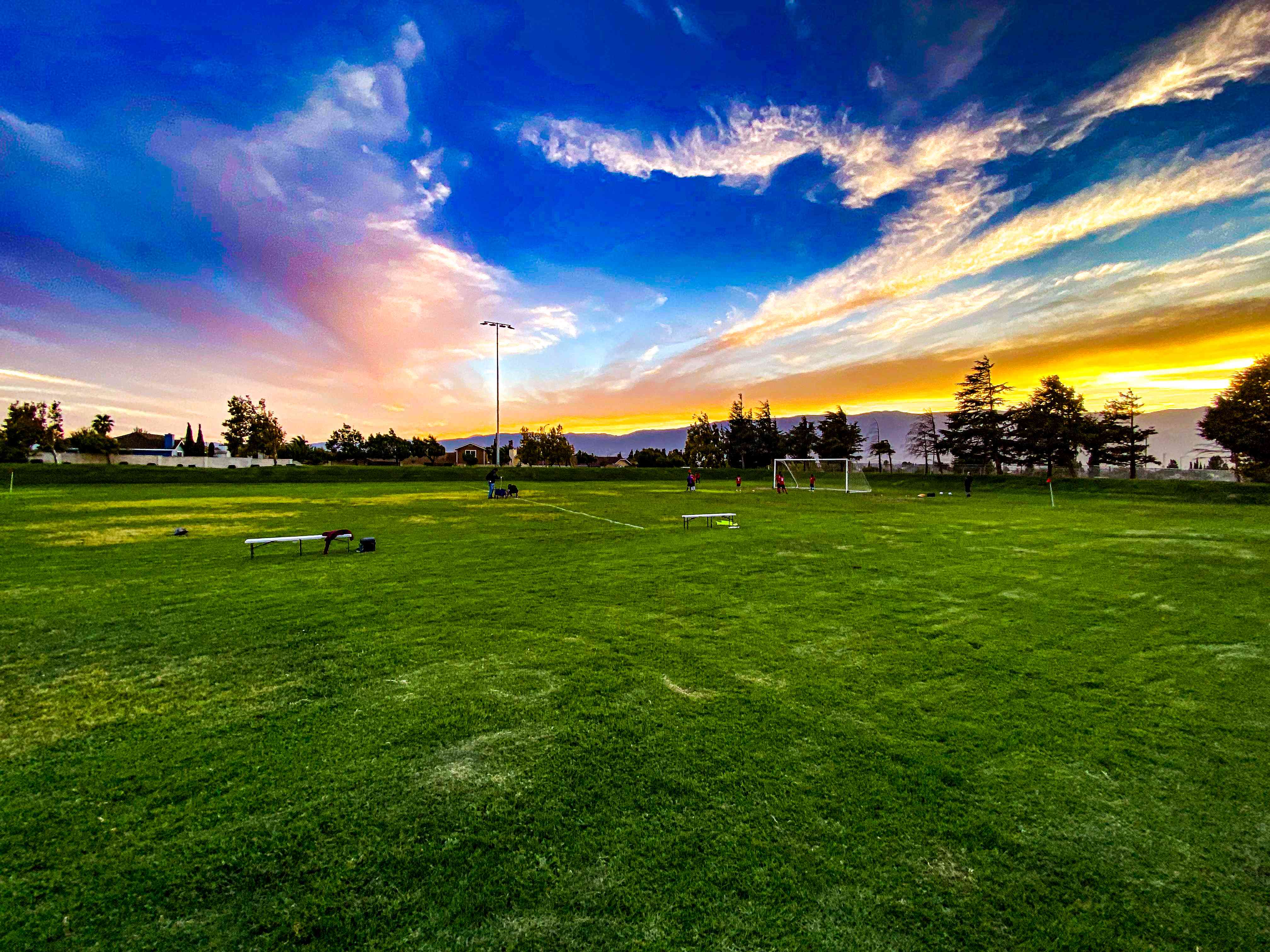
We invest in our youth by providing safe communities, access to health care, workforce development, educational pathways, quality housing, and parks and recreational opportunities for their well-being and growth.
Enhance Career Readiness, Vocational Training, and Financial Literacy
- Launch a Youth Entrepreneurship Incubator offering startup coaching, seed grants, and access to co-working space.
- Host an annual "Shark Tank"-style business pitch competition or youth pop-up marketplace in partnership with local sponsors and judges.
- Partner with the Small Business Development Center (SBDC), Hartnell Community College, and local chamber of commerce to provide workshops, mentoring, and technical assistance.
- Offer hands-on training in business modeling, financial planning, marketing, and branding.
- Develop a marketing and branding toolkit for youth entrepreneurs, including logo design and digital media guidance.
- Celebrate and promote youth-owned businesses during Economic Development Week or Youth Month.
- Provide microgrant funding to support youth-led startup initiatives.
- Partner with local financial institutions to deliver engaging financial literacy workshops on budgeting, banking, credit management, and digital security.
- Integrate financial education into after-school programs.
- Implement interactive learning experiences, such as budgeting simulations and financial goal-setting activities.
- Create a "Life Skills for Independence" program covering essential soft skills, including time management, communication, and conflict resolution.
- Collaborate with banks and credit unions to co-develop age-appropriate, co-branded curriculum materials for youth audiences.
Promote Youth Leadership, Civic Engagement, and Mentorship
- Establish an Interagency Youth Opportunities Working Group to align programs, share resources, and fill service gaps.
- Develop a shared set of competencies (e.g., communication, critical thinking, leadership) across all youth efforts.
- Implement a digital credential system or "Soledad Youth Passport" to track participation, achievements, and skill development.
- Coordinate efforts among schools, nonprofits, local businesses, and city departments to reduce duplication and ensure program sustainability.
- Conduct annual evaluations using youth feedback to refine and improve program outcomes.
- Pair youth participants with mentors from local government, business, and higher education sectors.
- Offer targeted workshops in goal setting, team building, and project management.
- Integrate leadership development opportunities within youth employment programs and city internships.
- Recognize and celebrate youth leaders annually through a City Council Youth Leadership Recognition Ceremony.
- Launch a summer Youth Leadership Academy focused on communication, advocacy, civic engagement, and community service.
Empower young residents to take an active role in local governance by revitalizing the Youth Council as a formal advisory body. Through leadership training, structured participation in City decision-making, and alignment with community initiatives, the Youth Council will serve as a platform for youth perspectives, innovation, and civic responsibility.
- Recruit a diverse and representative group of youth leaders to serve on a formal, restructured Youth Council.
- Establish a standing agenda item at City Council meetings for Youth Council updates, recommendations, and presentations.
- Provide training in parliamentary procedure, policy development, and public speaking to build confidence and civic competency.
- Allocate dedicated project funding and staff support to enable Youth Council–led initiatives and community projects.
- Integrate Youth Council priorities into citywide planning, policy development, and community engagement efforts to ensure meaningful youth participation in governance.
- Relaunch a comprehensive Youth Explorers Program through the Police and Fire Departments.
- Provide hands-on training, mentorship, and professional development opportunities to prepare participants for careers in public safety.
- Supply uniforms, equipment, and leadership workshops to promote teamwork, responsibility, and civic pride.
- Host Public Service Career Days, facility tours, and ride-along experiences to expose youth to real-world government operations.
- Establish the Explorers Program as a long-term workforce development pipeline, fostering future talent for public sector careers.
Expand Recreational Activities and Cultural Exposure
- Establish a Youth Innovation and Wellness Center featuring technology labs, creative studios, study lounges, and wellness areas.
- Co-design spaces with youth to ensure programs, amenities, and aesthetics reflect their interests and needs.
- Incorporate features such as Wi-Fi access, maker tools, gaming areas, art supplies, and co-working zones.
- Maintain extended evening and weekend hours to provide safe, enriching environments for youth engagement.
- Partner with nonprofits, schools, and youth-serving organizations to deliver specialized programming and mentorship.
- Develop dedicated teen zones equipped with 3D printers, media production tools, and startup incubator labs.
- Offer rotating innovation themes such as ag-tech, green design, fashion innovation, and app development.
- Integrate soft skills training including teamwork, communication, pitching, and goal setting into daily activities.
- Partner with public libraries and makerspace networks to expand access to equipment, materials, and training opportunities.
- Offer year-round recreation programs including sports, arts, outdoor education, and wellness activities.
- Launch pop-up recreation programs in underserved neighborhoods and housing developments.
- Collaborate with schools to coordinate schedules, facilities, and transportation for after-school access.
- Design intergenerational and family-friendly programming to strengthen community connections.
- Collect and analyze participation data and feedback to guide continuous program improvement.
- Outdoor and Environmental Education:
- Establish a Memorandum of Understanding (MOU) with schools and Pinnacles National Park for regular educational trips.
- Develop curriculum-aligned lesson plans focused on geology, ecosystems, and Native history.
- Provide transportation, meals, and bilingual guides to ensure equitable participation.
- Offer teacher training and classroom materials to connect field experiences to academic learning.
- Host weekend family hikes and community outdoor events to extend learning beyond schools.
- Cultural Engagement and Heritage Programs:
- Organize multicultural festivals, film nights, and global food fairs led by youth and families.
- Partner with schools and libraries to create cultural exploration curricula and highlight diverse heritages each month through music, art, and storytelling.
- Facilitate peer exchanges and virtual dialogues connecting Soledad youth with peers in other communities.
- Support youth-led oral history, art, and storytelling projects celebrating Soledad's history and cultural identity.
- Integrate Indigenous, farmworker, and local heritage into cultural and arts programming.
- Host local heritage days where youth lead tours, performances, or exhibitions.
- Display community murals, history timelines, and rotating exhibits in public spaces to promote civic pride.
- Music and Performing Arts:
- Create an MOU with Youth Orchestra Salinas (YOSAL) to outline shared goals, funding, and staffing.
- Identify school and community center locations to host orchestra rehearsals and performances.
- Recruit Soledad youth for after-school and weekend music instruction, providing transportation, instruments, and scholarships to remove barriers.
- Host annual community concerts in Soledad to showcase youth talent and celebrate investment in local arts.
- Coordinate with schools to ensure music programming complements academic schedules and supports student success.
Enhance Mental Health, Family Support, and Community-Based Resources
- Partner with schools, clinics, and community organizations to embed mental health counselors in youth-serving spaces such as schools, libraries, and recreation centers.
- Launch drop-in wellness clinics and telehealth kiosks at accessible public locations, including parks and youth centers.
- Establish peer support groups and mentoring circles facilitated by trained youth leaders and mental health professionals.
- Promote emotional wellness awareness through social media campaigns, school assemblies, and creative art or storytelling initiatives.
- Ensure all programs and services are trauma-informed, culturally responsive, and available in multiple languages.
- Provide Mental Health First Aid and youth crisis response training for city staff, educators, and community leaders to strengthen early intervention capacity.
- Coordinate with Monterey County Behavioral Health to align local initiatives with regional support networks and available funding opportunities.
Promote Public Art, Culture Expression, and Community Inclusivity
- Organize public art workshops and residencies where youth collaborate with local artists to co-create murals, sculptures, and installations.
- Designate rotating gallery spaces and public art walls in parks, libraries, and civic buildings to showcase youth work.
- Host youth-led art walks, performances, and cultural festivals highlighting civic identity and creative innovation.
- Offer art stipends, mini-grants, or competitions to encourage participation and recognize youth talent.
- Integrate Indigenous, immigrant, and farmworker histories into public art and storytelling projects that reflect Soledad's cultural heritage.
- Feature multigenerational and multilingual narratives through oral histories, banners, and community exhibits.
- Incorporate themes of identity, belonging, and resilience in youth writing, media, and performance contests.
- Commission youth-driven public art installations that celebrate Soledad's diversity and community pride.
8 – Health
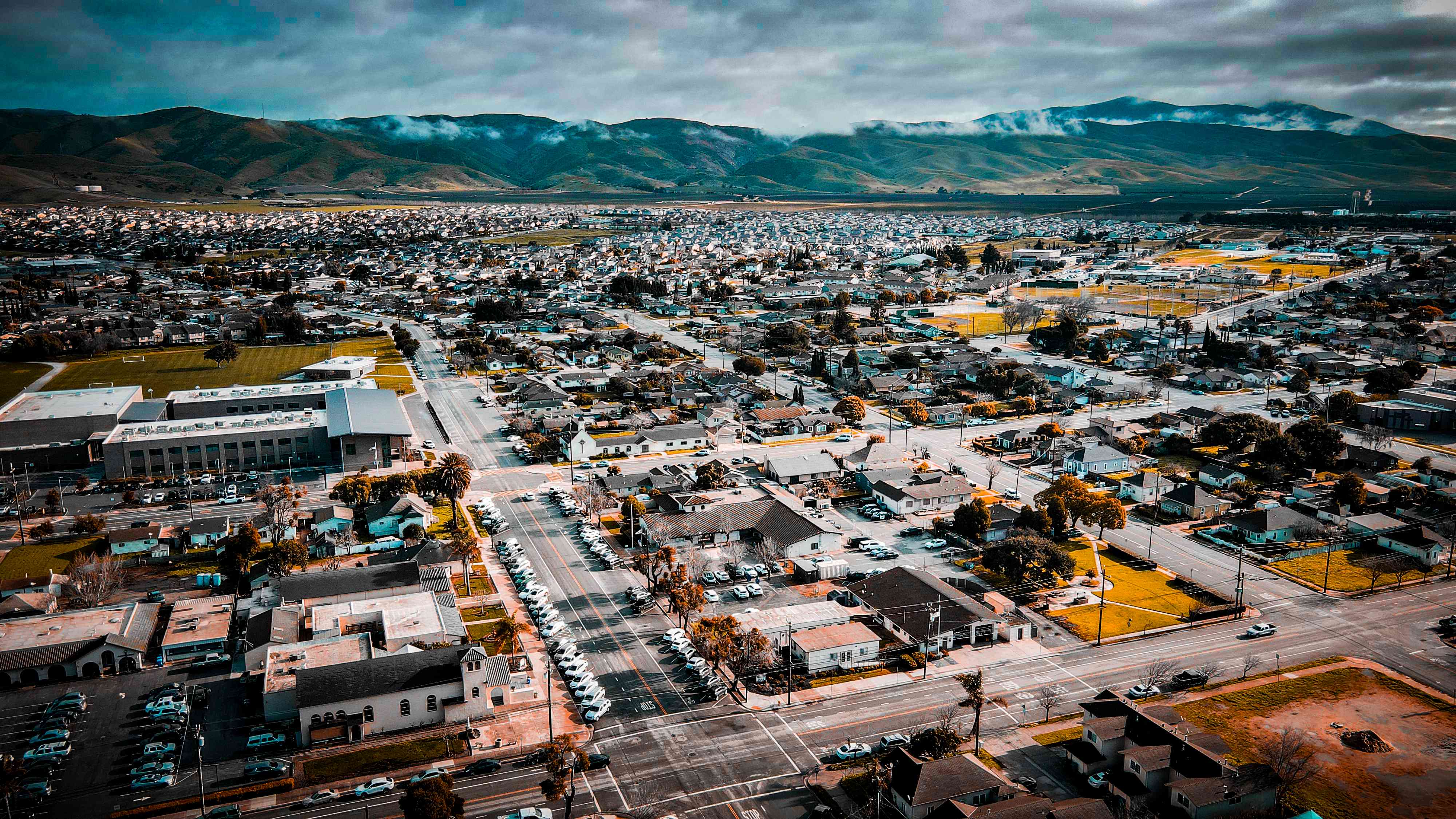
We promote both physical and mental health services through our infrastructure, facilities, stores, and services. This includes walking, biking, and access to healthy and safe foods. Healthcare and social services are plentiful and accessible to everyone in the community.
Attract New Healthcare Services and Providers
- Develop a community healthcare workforce pipeline through high school, community college, and internship programs.
- Market Soledad as a family-friendly, livable city to attract healthcare professionals.
- Partner with local health systems to create recruitment incentives for bilingual and culturally competent providers.
- Secure housing or relocation incentives for incoming providers through city or partner funding.
- Host mobile health fairs and specialty clinics to address immediate needs while permanent facilities are developed.
- Collaborate with developers to construct new healthcare buildings near major transportation corridors or high-need zones.
- Update zoning and streamline permitting to make it easier for new medical, dental, vision, and mental health providers to locate in Soledad.
- Evaluate public land and partnership opportunities for future clinics and dental sites.
- Conduct feasibility studies on demand for outpatient surgical, dental, or urgent care centers.
- Develop a comprehensive map of existing versus needed healthcare services to guide investment and funding proposals.
- Proactively reach out to Salinas Valley Health System and Mee Memorial to deliver specialty care locally.
- Establish regular joint-planning meetings with regional providers to identify service gaps and expansion opportunities.
- Develop cross-referral and data-sharing protocols to improve continuity of care between regional and local providers.
- Provide financial incentives such as reduced development impact fees to existing clinics that expand or the construction of new medical facilities.
- Explore adding small medical offices in city community facilities that could be used for traveling medical providers, including specialty services (optical, dental, etc.).
- Recruit a healthcare provider specializing in a Program of All-Inclusive Care for the Elderly (PACE) to enhance services for aging adults.
- Review and revise zoning regulations to facilitate the development of independent and assisted living facilities in Soledad.
- Build partnerships with senior-focused nonprofit organizations to expand access to nutrition, transportation, case management, and in-home care services, while educating seniors and their families about program eligibility and benefits.
Expand Mobile Health, Crisis Units, and Mental Health Support
- Partner with Monterey County Behavioral Health and nonprofit providers to deploy a local mobile crisis unit staffed with licensed mental health professionals, peer support specialists, and EMTs or paramedics.
- Equip vans, RVs, or converted vehicles specifically for field stabilization, assessment, and referral services.
- Collaborate with Behavioral Health to track and analyze aggregated service outcome data, adjusting deployment schedules and staffing based on community needs.
- Work with mobile health providers to deliver substance use treatment, harm reduction services, and medical care to the community's most vulnerable populations.
- Ensure all public safety personnel receive crisis intervention training and have direct access to the mobile crisis unit when responding to incidents.
- Coordinate with the Health Department to expand the Wellness Navigator program, connecting residents with appropriate mental health and substance use treatment options.
- Continue promoting the use of Narcan, including the installation of a dispenser at the Fire Station.
- Collaborate with case management teams to refer encampment participants to behavioral health and substance use treatment services.
- Partner with Behavioral Health to identify and establish potential drop-in counseling locations in city-owned facilities.
- Recruit mental health and substance use treatment providers who are trauma-informed, culturally competent, and Spanish-accessible.
- Raise community awareness of available programs through multiple channels, including flyers, social media, and local networks, beyond formal referral pathways.
- Explore the use of opioid settlement or grant funding to expand substance use treatment services.
- Pursue new partnership opportunities with organizations such as Interim, Inc. and Sun Street Centers to support vulnerable populations struggling with mental health and substance use challenges.
Promote Community Health Awareness and Preventive Care
- Host the annual Overdose Awareness Symposium at the Community Center to educate residents and reduce stigma.
- Collaborate with the Monterey County Health Department to increase community awareness and education on substance use, opioid addiction, and fentanyl-related dangers.
- Develop and distribute multilingual public awareness materials on mental health, hydration, and healthy eating.
- Share health information broadly via the city website and social media platforms.
- Support the Youth Council in partnering with schools and the Monterey County Health Department to adapt and repackage educational materials for youth audiences.
- Create a health resource page on the city website and promote it through a QR code portal linking residents to urgent health and crisis services.
- Collaborate with the Monterey County Health Department to measure the impact of campaigns locally and share results via a public dashboard.
- Host an annual Ciclovia-style car-free event where families can walk, bike, skate, and engage with wellness activities.
- Design and maintain walking trails and loops near schools and parks, incorporating public art, hydration stations, and shaded areas.
- Launch a '100-Mile Challenge' walking tracker program with incentives for families and seniors to encourage physical activity.
- Offer weekly fitness, stretching, and dance classes for adults at the Community Center.
- Partner with Pinnacles National Park to provide nature-based wellness outings, including trail walks, mindfulness hikes, and outdoor yoga.
- Develop a nature prescription pilot program in collaboration with local healthcare providers to support mental and physical wellness.
- Encourage youth participation through nature clubs and school field trips that align with wellness goals.
- Integrate Blue Zones principles into city policies and planning, including food access, housing, streetscape design, and community spaces.
- Collaborate with schools, grocery stores, and restaurants to encourage healthy default options and support nutritious choices.
- Offer community programs such as cooking classes, volunteer opportunities, and community gardening that align with Blue Zones principles.
- Train city staff and community leaders as Blue Zones ambassadors to promote healthy behaviors and support community-wide wellness initiatives.
- Track and report annual progress on community well-being indicators tied to Blue Zones goals, sharing results with residents and stakeholders to ensure accountability.
- Partner with the County Health Department and agricultural agencies to share pesticide monitoring data with the public.
- Distribute multilingual educational materials (fact sheets, infographics, videos) on pesticide use and health impacts.
- Host a community workshop with health experts to help residents understand the monitoring results.
- Provide a link to pesticide and air quality monitoring data on the city website.
- Encourage schools to integrate environmental health awareness into science and health curricula.
- Maintain agricultural buffers between farmland and developed areas in Soledad.
Provide Healthy Food Access and Nutrition Programs
- Partner with the Monterey County Food Bank to increase the frequency and reach of food distributions each week.
- Identify and collaborate food assistance providers serving undocumented residents, such as Celebration Nation.
- Work with the Soledad Unified School District and Family Resource Center to distribute supplemental food to families in need.
- Organize an annual citywide food drive around the holidays to support local families.
- Collaborate with WIC to promote program participation and provide additional resources to eligible families.
- Partner with Step Up to provide food assistance to participants of the Encampment Resolution Fund Program.
- Educate residents on how to apply for CalFresh and access other available nutrition assistance programs.
- Partner with the Historical Society to expand the farmers' market and potentially relocate to Front Street.
- Coordinate with the Chamber to expand the Night Market to offer local food and produce to Soledad residents.
- Provide reduced rates of subsidies for small farmers and local food entrepreneurs to join markets or participate in local events as vendors.
- Develop a community garden policy for local parks, including maintenance responsibilities and equitable access policies.
- Create culturally relevant cooking and nutrition programs in partnership with the schools.
- Launch seasonal workshops (e.g., farm-to-table cooking, preserving foods, composting).
- Promote farmers' markets and cooking programs through social media, flyers, and multilingual outreach.
- Explore senior options for reduced meals and more healthy choices.
- Expand on the Tiny Chef Program by offering more cooking classes for residents of all ages.
- Establish agreements with local farms to provide fresh produce for schools and community programs.
- Launch a "farm-to-table" initiative connecting local farms with restaurants, city institutions, and community organizations.
- Collaborate with local farms to expand SNAP/EBT and WIC acceptance at farm stands and farmers' markets.
- Organize seasonal farm tours and "meet the farmer" events to educate residents about healthy eating and strengthen community connections.
- Implement farm-to-school programs that combine produce supply with classroom-based nutrition education.
- Support and promote community-supported agriculture (CSA) programs, encouraging participation through city channels and outreach campaigns.
Enhance Senior Health, Recreation, and Social Engagement
- Review the Alliance on Aging Action Plan and identify short-term priorities relevant to Soledad, including transportation, housing, health, and social connection.
- Designate a city staff liaison to coordinate with the Alliance on implementation progress.
- Host community forums with seniors to share Action Plan priorities and gather feedback on local needs.
- Expand access to senior wellness programs, including exercise classes, nutrition workshops, chronic disease management, and wellness coaching.
- Partner with Monterey County and local nonprofits to improve transportation options for older adults (e.g., shuttle routes, volunteer driver programs, ride vouchers).
- Increase outreach and education on available resources for seniors, providing multilingual materials.
- Support affordable, age-friendly housing initiatives by aligning with city housing programs.
- Offer programs to reduce isolation, including walking buddy programs, home visit wellness checks, and peer-led social clubs.
- Expand the Senior Travel Program to local destinations such as the Monterey Bay Aquarium.
- Develop or partner on facilities offering affordable senior housing with onsite services.
- Provide integrated medical, mental health, nutrition, and daily living support at senior facilities.
- Ensure ADA accessibility, culturally responsive design, and access to outdoor spaces.
- Explore co-location with community gardens, child care, or arts programs to support multi-use facilities.
- Establish a Senior Companion or Friendly Caller program to connect isolated residents with regular support.
- Partner with legal aid and health agencies to provide end-of-life planning workshops, including wills, powers of attorney, and advance directives, in English and Spanish.
- Facilitate memory sharing, grief support groups, legacy letter writing, and culturally tailored spiritual or communal closure practices.
- Develop senior outreach programs pairing volunteers or staff with isolated older adults for regular check-ins.
- Create peer-led grief support groups and memorial walls in public facilities.
- Incorporate culturally specific traditions into outreach, education, and support programs.
- Install all-ages outdoor fitness zones with equipment supporting strength, balance, and cardio.
- Include adaptive equipment for users with mobility devices or limited physical capacity.
- Ensure ADA-accessible pathways from parking lots, sidewalks, and restrooms to fitness areas.
- Provide instructional signage or QR codes for safe equipment use and exercise guides.
- Coordinate with local trainers or community health workers to offer pop-up fitness classes.
Promote Healthy, Inclusive Community Events and Active Public Spaces
- Organize car-free street events that encourage walking, biking, skating, and feature live music or cultural performances.
- Partner with local schools, artists, and wellness providers to activate event spaces with pop-up activities, workshops, and interactive demonstrations.
- Provide multilingual outreach, ADA accommodations, and free transportation to ensure broad and inclusive participation.
- Include health screenings, fitness demonstrations, mental wellness booths, mobile vaccination clinics, nutrition education, and hydration stations within the event layout.
- Collect participant and vendor feedback after each event to inform improvements and scale future offerings.
9 – Education
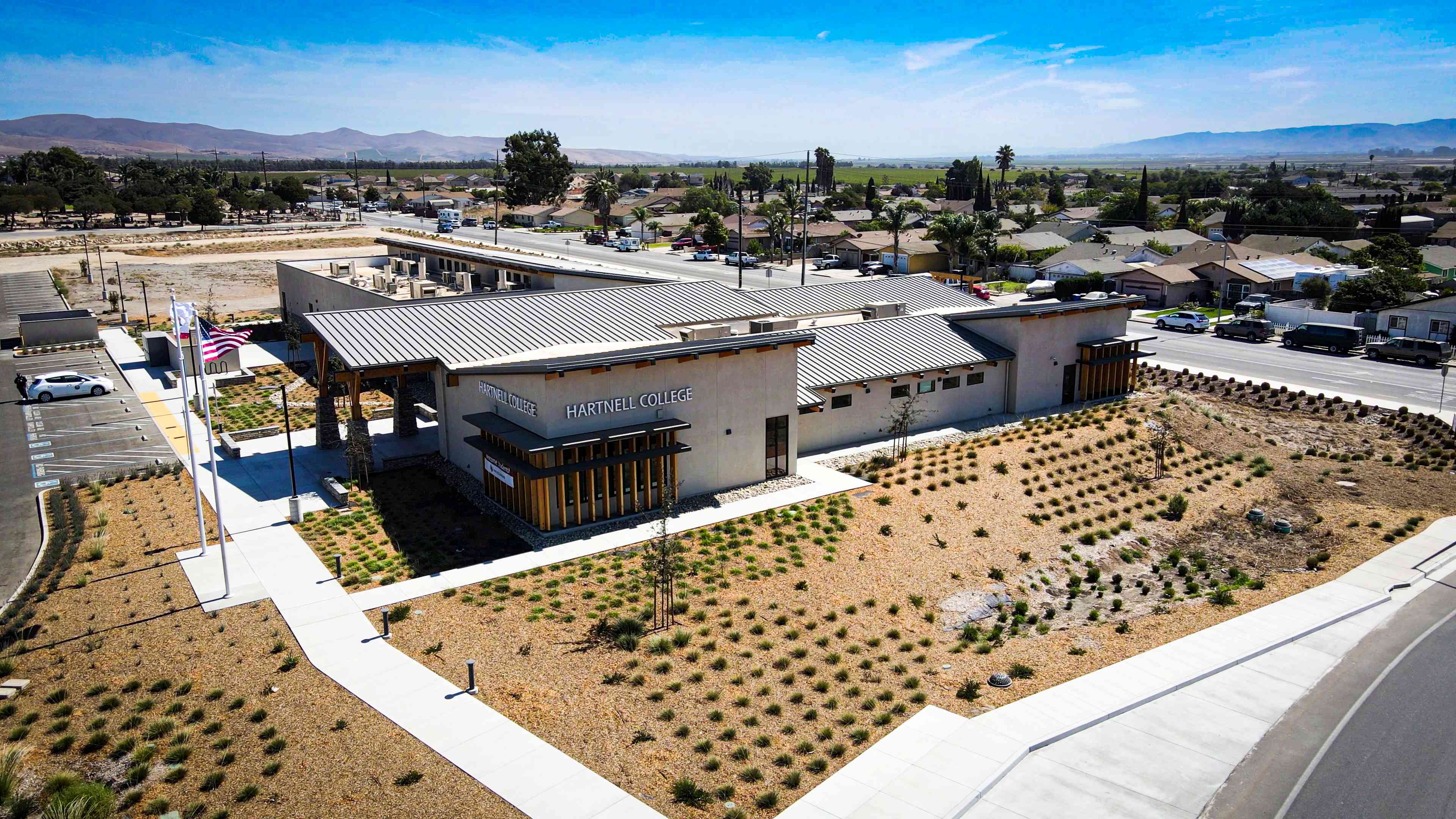
We foster the prosperity of our community by investing in and expanding a range of educational opportunities including higher education and vocational training and resources that prepare our workforce for well-paying jobs. We are proud to provide educational and vocational services in Spanish, English, and other languages spoken locally.
Enhance Vocational and Higher Education Opportunities
- Advocate for continued investment in Hartnell College's Soledad campus, including new classrooms, labs, and student support facilities.
- Collaborate with Hartnell College to expand Career Technical Education (CTE) programs in agriculture, IT, allied health, and construction management.
- Host open houses, enrollment fairs, and student showcases to increase visibility and participation in local higher education programs.
- Provide city infrastructure and permitting support to help accelerate campus development timelines.
- Integrate Hartnell College's academic programs into city strategic plans, youth workforce pathways, and economic development initiatives.
- Identify local properties for hands-on learning, research, and ag-tech.
- Support local growers and vintners with marketing assistance, grant applications, and student internship placements.
- Promote Soledad as an emerging destination for agri-tourism and wine education through regional and state trade networks.
- Host an annual wine and agricultural education festival to showcase student projects, local wines, and tourism assets.
Support Childcare Providers to Expand Access
- Collaborate with schools, faith-based organizations, and local employers to increase the number of licensed early childhood education slots.
- Support workforce development initiatives that provide training, certification, and business assistance for new childcare providers through community colleges or related programs.
- Offer incentives for employers that provide on-site or subsidized childcare for their workforce.
- Develop shared-use childcare facilities within city-owned buildings, community centers, or new housing developments.
- Expand access to non-traditional-hour childcare options for shift workers, agricultural laborers, and emergency personnel.
- Conduct outreach campaigns to help families understand and access state and federal childcare assistance programs.
Strengthen Technology Access, Digital Literacy, and Internet Infrastructure
- Offer free or low-cost digital literacy and computer skills classes at the Community Center.
- Integrate English as a Second Language (ESL) instruction with technology training to improve digital navigation and job readiness.
- Develop bilingual video tutorials and printed guides on essential digital tools, including email, telehealth platforms, and online applications.
- Establish a volunteer or youth tech corps to mentor seniors, low-income families, and first-time computer users.
- Partner with schools, Hartnell College, and workforce agencies to train instructors and expand family outreach.
- Partner with technology providers such as AT&T to expand free or low-cost laptop distribution programs for residents.
Align School Facility Planning and Workforce Housing Development with City Land Use and Growth
- Establish a joint City–School District task force to evaluate housing needs for teachers and school staff.
- Conduct a comprehensive workforce housing survey to assess affordability gaps, commute patterns, and housing preferences.
- Identify and evaluate potential development sites, including district- and city-owned parcels, for workforce housing projects.
- Explore diverse funding mechanisms such as state workforce housing grants, Low-Income Housing Tax Credits (LIHTC), and public–private partnerships.
- Review zoning and land use policies to facilitate workforce housing near school sites and key community amenities.
- Develop conceptual design models such as apartments, townhomes, or ADUs tailored to the needs of educators and support staff.
- Conduct a joint inventory of existing and surplus School District properties.
- Assess opportunities for shared or joint use of facilities such as gyms, fields, and community centers.
- Identify surplus parcels suitable for redevelopment into housing, parks, or other community-serving uses.
- Align School District facility planning with the City's General Plan, zoning, and capital improvement priorities.
- Develop joint-use agreements to co-locate city services on school sites (e.g., health clinics, after-school programs, or resource centers).
- Coordinate land use reviews to address traffic circulation, parking, and Safe Routes to School improvements.
- Coordinate with the School District on planning and implementation of the new schools within the Miramonte Specific Plan area.
10 – Internal Operations
We maintain effective, transparent, and accountable city governance through strategic planning, fiscal sustainability, organizational excellence, and workforce support.
Maintain and Track Progress on the Strategic Plan and Align with Departmental Work Programs
- Facilitate a strategic planning retreat to review progress, reassess priorities, and refine citywide goals.
- Engage departments, boards, and residents through visioning and prioritization workshops to ensure alignment with community needs.
- Align departmental work plans, performance metrics (KPIs), and budgets with the revised strategic goals.
- Publish an annual performance and progress report to enhance transparency and accountability.
- Establish a standardized reporting framework for departments to track progress quarterly or semi-annually.
- Develop an internal strategic plan dashboard (digital or in spreadsheet form) to visualize performance indicators and milestones.
- Integrate strategic goals into the annual budgeting process to ensure funding aligns with Council priorities.
- Assign a staff lead or cross-departmental team responsible for plan coordination, tracking, and continuous improvement.
- Schedule mid-cycle plan reviews (e.g., every 2 years) to assess progress and recalibrate targets.
- Document lessons learned and best practices to improve future strategic planning cycles.
Advance Good Governance, Transparency, and Effective Council Leadership
- Update and consolidate the Council's Rules, Policies, and Procedures into a comprehensive Governance Manual modeled after best practices from peer cities such as Temecula.
- Continue providing a structured orientation program for newly elected Council Members, including a comprehensive resource packet and funding for participation in the Cal Cities New Mayors and Council Members Academy.
- Continue to provide an orientation with materials for new Council Members and fund training at the Cal League of Cities Academy.
- Facilitate training sessions and workshops on governance best practices, ethics, and leadership development.
- Create a shared governance calendar and communications platform to coordinate initiatives and deadlines across departments and agencies.
- Establish regular joint meetings with local and regional partners, including the school district, special districts, and county agencies, to strengthen intergovernmental collaboration.
- Ensure representation on city commissions, boards, and regional agencies to advocate for city interests.
- Continue to host an annual State of the City address by the Mayor.
- Publish public dashboards, progress reports, and host open forums to maintain transparency and accountability.
- Upgrade software and audiovisual systems to support hybrid meetings and high-quality live broadcasts.
- Ensure all public meetings are recorded, captioned, and archived on a mobile-accessible platform.
- Continue to provide consistent Spanish translation at all community meetings.
- Improve the city's website navigation, search functions, and user interface for better public access to information.
- Provide digital literacy assistance to residents on how to access meetings, documents, and online services.
- Train department staff to provide timely communications and coordinate consistent messaging across departments through the Community Engagement team.
- Develop a legislative advocacy program to track state and federal issues impacting the city.
- Build relationships with legislators and regional agencies to ensure the city's priorities are represented.
- Prepare policy briefs and advocacy materials for Council use during legislative sessions and interagency meetings.
- Ensure all elections are conducted in accordance with state and federal laws, maintaining fairness, transparency, and accessibility.
- Enhance voter education and outreach to increase participation and awareness of the new city districts.
- Support accessible voting methods, including mail-in and in-person options.
- Share clear candidate and campaign finance guidelines to ensure ethical conduct and compliance on the city website.
Foster a Healthy Organizational Culture and Invest in Leadership and Employee Development
The City is committed to cultivating a workplace culture grounded in collaboration, accountability, and continuous learning. By investing in leadership development, staff engagement, and equitable practices, the organization will strengthen its internal capacity to deliver exceptional public service. This goal emphasizes the importance of empowering employees at all levels, building leadership pipelines, and ensuring city policies and performance systems reflect shared values of excellence, inclusion, and well-being.
- Implement a citywide leadership development program for staff at all levels, including emerging leaders.
- Establish a structured mentorship program pairing senior leaders with early-career employees.
- Provide access to external leadership training, certifications, and professional conferences.
- Incorporate leadership skill-building modules into employee development and performance plans.
- Facilitate peer learning circles and cross-departmental coaching sessions to promote collaboration.
- Partner with regional universities or institutes to deliver customized leadership academies.
- Facilitate regular leadership sessions focused on coaching, communication, and accountability.
- Educate employees and labor groups about the new Personnel Manual.
- Host employee listening sessions to identify outdated or unclear policies.
- Redesign the employee performance evaluation system to strengthen engagement and effectiveness.
- Align departmental work plans and key performance indicators (KPIs) with citywide strategic priorities.
- Maintain robust recruitment and retention efforts to attract and develop top talent.
- Identify mission-critical positions and define required skills and competencies.
- Develop internal talent pipelines through mentoring, rotational assignments, and advancement pathways.
- Incorporate knowledge transfer tools, job shadowing, and continuity documentation into standard practice.
- Create both emergency and long-term succession plans for key leadership positions.
- Establish core citywide values and integrate them into onboarding, evaluations, and recognition programs.
- Develop employee recognition initiatives that celebrate teamwork, innovation, and excellent customer service.
- Conduct regular workplace culture and engagement surveys to identify improvement opportunities.
- Use survey feedback to inform leadership training, communication strategies, and policy updates.
- Continue to support the "Sunshine Committee" activities to improve employee morale.
- Establish an informal monthly "Coffee with the City Manager" series to provide employees with an open forum to share ideas, feedback, and suggestions for improving internal operations and enhancing the City of Soledad.
- Identify and hire a trainer to provide equity training for city staff, leadership, and City Council.
- Schedule mandatory training sessions.
- Offer separate leadership-focused equity workshops for department heads and the City Council.
- Provide equity resource guides and toolkits for applying training to daily work.
- Incorporate real case studies into training to ensure relevance.
- Establish a feedback system to evaluate participant learning and training effectiveness.
Modernize Technology and Fleet Infrastructure to Support Efficient, Secure, and Resilient City Operations
Modern technology and reliable fleet assets are essential to delivering high-quality, efficient, and responsive public services. The City will strengthen its digital infrastructure, enhance cybersecurity, and expand online accessibility to better serve residents and staff. In addition, the City will invest in a modern, well-maintained fleet that supports emergency response, field operations, and sustainability goals.
- Complete the IT server replacement project for City Hall, Wastewater Reclamation Facility, and the Police Department.
- Upgrade the city's firewall and implement other cybersecurity enhancements.
- Improve the Wi-Fi capabilities at City Hall and other city government buildings.
- Inventory all existing hardware, servers, mobile devices, and networking equipment and evaluate the age, performance, and security of existing systems.
- Audit current software licenses, applications, and platforms used across departments.
- Train city employees on the new IT ticketing systems and use the data to identify technology gaps and service challenges.
- Assess cybersecurity vulnerabilities and ensure compliance with data protection regulations; Develop and maintain a cybersecurity and system maintenance plan to ensure reliability and data protection.
- Identify redundant systems and opportunities for integration or consolidation.
- Develop cost estimates and phased implementation plans for system upgrades and replacements.
- Assess broadband and connectivity infrastructure, including internet speeds and coverage gaps, to include digital equity investments within the Capital Improvement Program (CIP).
- Conduct a comprehensive audit of the City's website, meeting systems, and digital platforms.
- Redesign the city website for improved accessibility, mobile responsiveness, and multilingual support.
- Implement ADA-compliant features across all digital platforms, including captions, contrast tools, and screen-reader compatibility.
- Upgrade Council chambers and meeting rooms with modern audio-visual and hybrid meeting technology.
- Launch a centralized resident service portal for online forms, payments, and service requests.
- Standardize meeting streaming, archiving, and public access systems to promote transparency.
- Provide staff and Council training on new digital tools and platforms.
- Conduct a comprehensive fleet needs assessment and develop a Fleet Replacement Plan that includes a phased transition to electric and low-emission vehicles.
- Collaborate with the Finance Department to establish a sustainable financing strategy including lease and purchase models to create a predictable, long-term vehicle replacement schedule.
- Evaluate the cost-benefit of internal versus contracted fleet maintenance and explore regional service partnerships with neighboring South County cities to improve efficiency and reduce costs.
- Prioritize vehicle acquisition and replacement for police, fire, public works, and utilities based on operational need and lifecycle analysis.
- Develop preventive maintenance and replacement schedule with multi-year projections and funding strategies.
- Explore shared fleet models, pooled vehicles, or electric/hybrid replacements to enhance efficiency and sustainability.
- Integrate fleet modernization goals into the City's sustainability and resilience plans and invest in EV charging infrastructure for the City fleet.
Promote Fiscal Responsibility and Grow Grant Funding Capacity
Fiscal responsibility and resource diversification are essential for maintaining high-quality public services and preparing for future growth. The City will enhance its financial sustainability through balanced budgeting, improved cost recovery, and targeted reserve building. Simultaneously, the City will expand its capacity to secure competitive grants and external funding to support infrastructure, community programs, and long-term capital investments.
- Maintain a balanced budget and continue building financial reserves in accordance with City policy.
- Update the Utility Rate Study to ensure the long-term financial health of the City's utility systems.
- Adopt updated Development Impact Fee schedules that reflect current infrastructure needs.
- Improve cost recovery for development, permitting, and inspection services.
- Strengthen staff's use and understanding of the Incode 10 financial management system.
- Complete annual audits on time and implement recommendations promptly.
- Conduct an annual review of Transient Occupancy Tax (TOT) compliance for local hotels.
- Improve collection of outstanding loans, developer accounts and business license fees.
- Re-evaluate the Townsend contract and identify a contracted grant services provider to assist with identifying, preparing, and submitting grant applications.
- Develop and maintain a Master Grants Calendar with deadlines, eligibility, and responsible departments.
- Establish interdepartmental grant working groups to coordinate proposals and leverage technical expertise.
- Track and report grant performance quarterly, including awarded, pending, and denied applications.
- Create standardized grant templates (letters of support, demographic data, city statistics) to streamline submissions.
- Build partnerships with regional, state, and federal agencies to remain informed on funding opportunities.
- Implement a capital campaign for the Community Center to raise $1.8 million.
- Designate a staff member to coordinate and oversee grant activities across all departments, ensuring alignment, efficiency, and compliance.
- Develop a shared calendar of recurring grant deadlines accessible to multiple departments.
- Align funding proposals with the Strategic Plan.
- Track and publicly share grant outcomes to enhance transparency and community trust.
- Partner with county agencies and regional coalitions to pursue large-scale collaborative funding opportunities.
- Incorporate equity metrics and community benefit measures into grant proposals.
Enhance Workforce Support and Housing
The City recognizes that access to stable, affordable housing is vital to attracting and retaining a talented and dedicated workforce. By partnering with housing developers and leveraging creative financing tools, the City will work to expand housing options for employees, reduce commuting barriers, and strengthen its connection to the community it serves.
- Partner with affordable and workforce housing developers, foundations, and regional agencies to identify or designate housing opportunities for City employees.
- Incorporate workforce housing incentives or set-asides into future development agreements and City-supported projects.
- Survey staff to assess housing needs, affordability barriers, and location preferences related to proximity to work.
- Evaluate shared-equity, lease-to-own, and other innovative housing models to support long-term employee retention.
- Explore partnerships with financial institutions and local employers to expand access to homebuyer assistance or down payment programs.